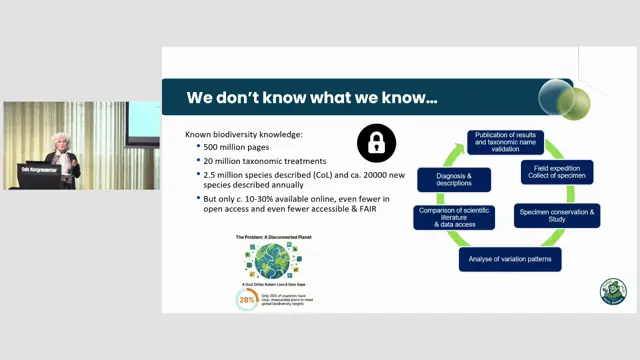
21 - 25 September 2026, Oslo

Find your next talk.

Revisit a session or discover a new voice. Browse all 255 talks and discussions, with summaries, transcripts and recordings.

Looking for something someone said? Search the transcripts ↗

255 talks & discussions

By day, room & time
talk · 21 Sept · 09:30–⁠09:45 · Aula

Address from the TDWG Chair: highlights of the year and TDWG at a crossroads

TDWG has had a productive year, but a growing, more diverse community and the rise of AI put it at a crossroads that needs more volunteers, better documentation and more sustainable maintenance and funding.

David Bloom
talk · 21 Sept · 09:45–⁠10:30 · Aula

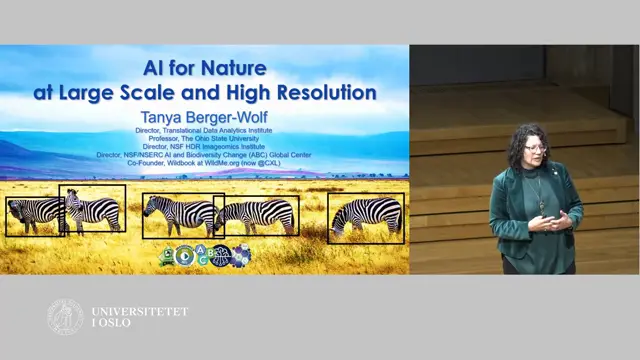
AI for Nature at Large Scale and High Resolution

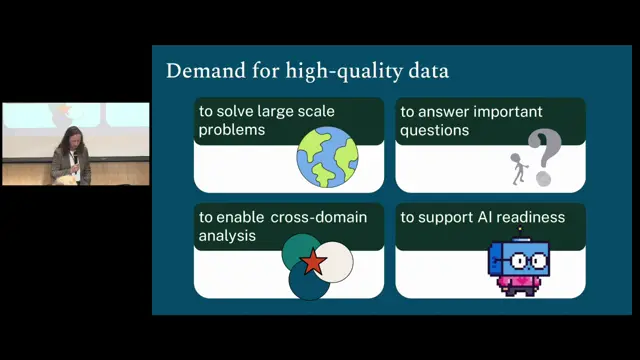
AI can help fill biodiversity knowledge shortfalls only if biological knowledge is built into the models and the data infrastructure is FAIR for AI and returns value to primary data collectors, because 'there is no AI without data'.

Tanya Berger-Wolf
talk · 21 Sept · 11:00–⁠11:45 · Aula

Sámi perspectives on biodiversity data governance: when biodiversity data travel, does their governance travel with them?

Biodiversity data about lands, ecosystems and species can be Indigenous data, so infrastructures must ask whether context, authority and responsibilities travel with the data as FAIR makes them easier to reuse.

Máret J. Heatta
talk · 21 Sept · 11:46–⁠12:30 · Aula

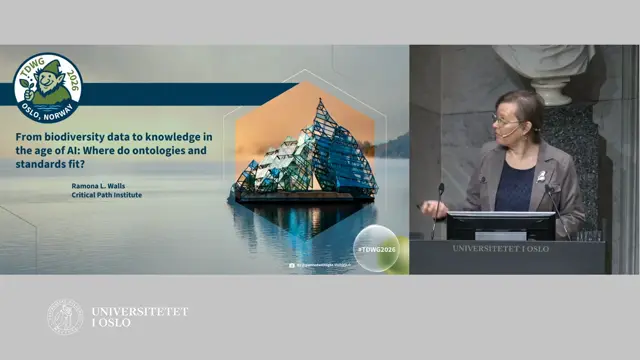
From biodiversity data to knowledge in the age of AI: where do ontologies and standards fit?

AI can generate data and candidate knowledge, but only standards, ontologies, provenance and governance let data become trusted evidence and therefore knowledge, which is why TDWG matters more than ever.

Ramona Walls
talk · 21 Sept · 14:00–⁠14:15 · Aula

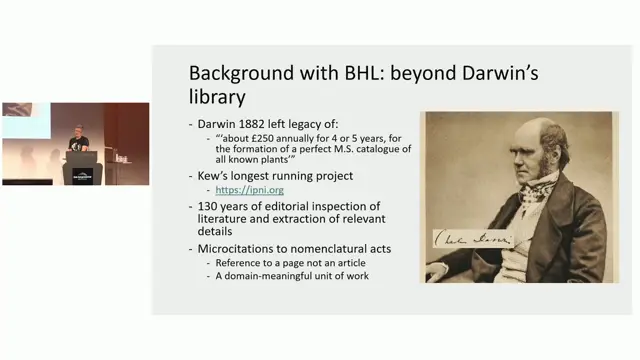
Building a New Foundation for the Biodiversity Heritage Library

BHL has survived losing its Smithsonian home by becoming an independent, globally governed consortium, but its future is still not secure and it needs community support.

Nicole Kearney
talk · 21 Sept · 14:15–⁠14:30 · Aula

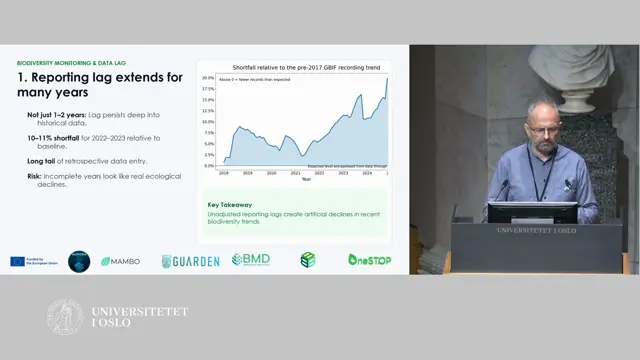
Reducing the lag from observation to action

Timeliness is a missing biodiversity knowledge shortfall: publish soon, publish often, and improve continuously.

Quentin Groom
talk · 21 Sept · 14:30–⁠14:45 · Aula

Keeping Colliders in Physics: Rebuilding the ALA taxonomic backbone

Taxonomic checklists are not backbones: data aggregators need a curated single hierarchy with quality-control feedback loops, not automated merging of checklists.

Cameron Slatyer
talk · 21 Sept · 14:45–⁠15:00 · Aula

DwC-DP Integration at GBIF

GBIF is close to supporting Darwin Core Data Packages end to end, with typed and stricter validation, while keeping Darwin Core Archives fully supported.

Federico Mendez, Mikhail Podolskiy
talk · 21 Sept · 15:00–⁠15:15 · Aula

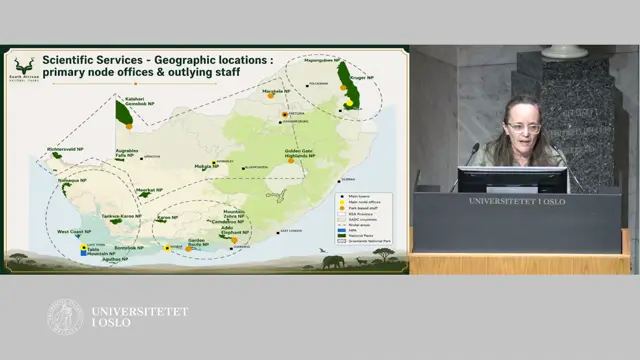
Using automation to consolidate biodiversity occurrence data in South African National Parks

Automating the harvest, integration and summary of biodiversity data lets park staff get evidence-based species lists and dashboards without laborious manual compilation.

Judith Botha
talk · 21 Sept · 15:15–⁠15:30 · Aula

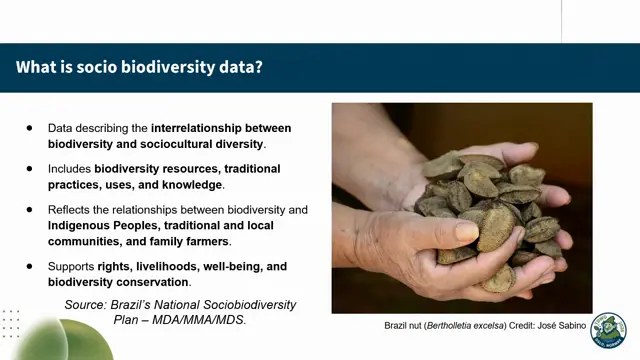
Extending Darwin Core to Represent Sociobiodiversity and Traditional Knowledge

Representing traditional knowledge in biodiversity standards needs new terms, knowledge-centred (not species-centred) models, and careful governance of who holds and publishes the data.

Clara Baringo Fonseca
talk · 21 Sept · 15:30–⁠15:45 · Aula

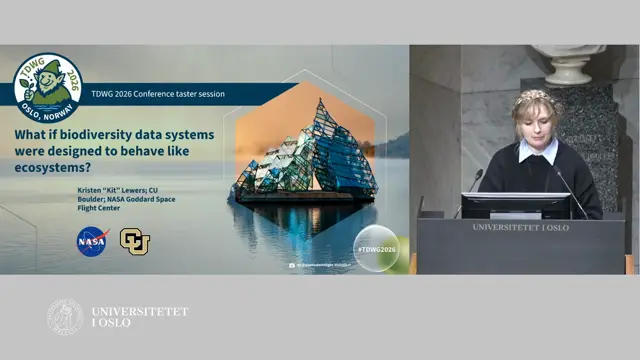
What if biodiversity data systems were designed to behave like ecosystems?

Biodiversity information systems should be designed like ecosystems: loosely coupled, event-driven components linked by shared standards, able to reorganise as conditions change.

Kit Lewers
talk · 21 Sept · 15:45–⁠16:00 · Aula

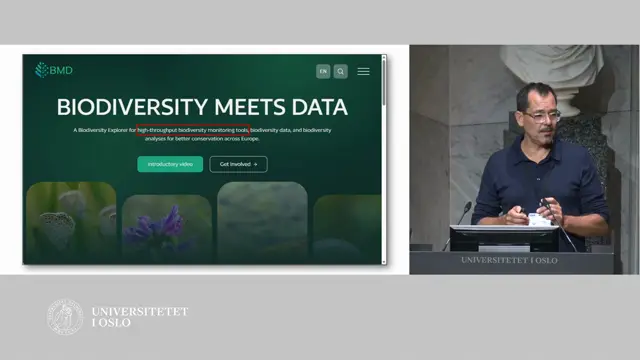
Mainstreaming high-throughput biodiversity monitoring using AI

AI identification platforms like ARISE can take sensor data automatically to GBIF-published, standardised data for protected-area managers, but training costs are high and human verification still matters.

Niels Raes
talk · 22 Sept · 08:35–⁠08:47 · ODIN

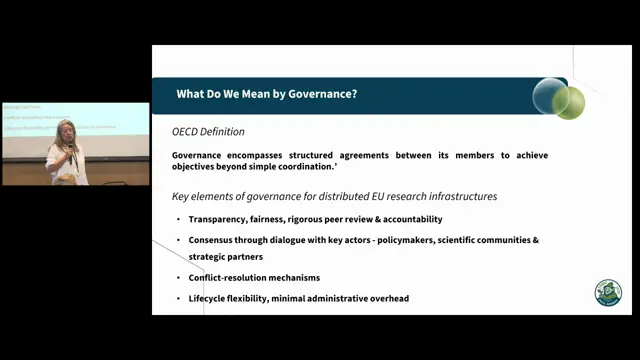
Governance as a Foundation for Resilient Biodiversity Data Infrastructures: Lessons from DiSSCo

Inclusive, funder-connected governance designed into a research infrastructure from day one is a core ingredient of its resilience.

Eva Alonso
talk · 22 Sept · 08:47–⁠08:59 · ODIN

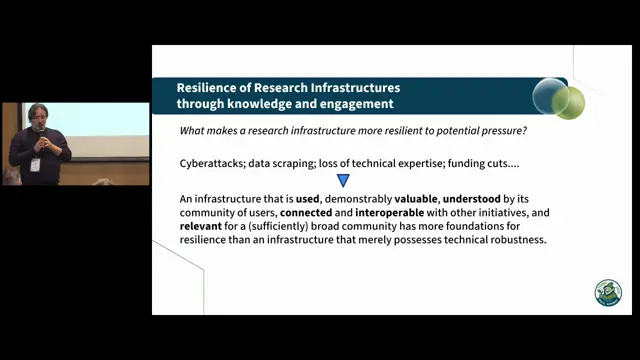
Resilience of Research Infrastructures through knowledge and engagement

Communication, engagement and continuous user training make an infrastructure relevant enough that a community will want it to survive.

Jose, Mareike Petersen
talk · 22 Sept · 08:59–⁠09:11 · ODIN

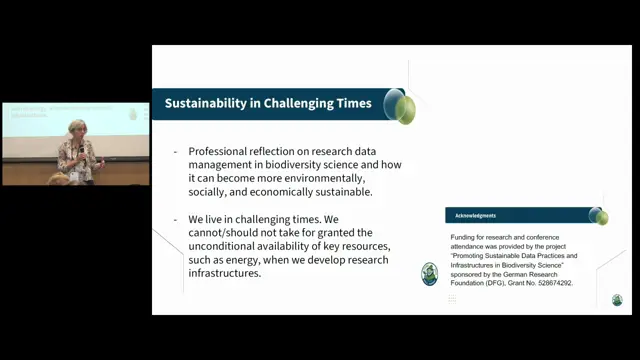
Adopting Environmental Sustainability as a Strategy to Build Resilient Data Infrastructures in Biodiversity Science

Building frugal, environmentally sustainable data infrastructures is a practical risk-management strategy for resilience.

Giuditta Parolini
talk · 22 Sept · 09:11–⁠09:23 · ODIN

Supporting resilient data infrastructure in a changing environment

Technical copies are not enough: durable data infrastructure depends on preserved human expertise, messy maintenance work and data standardized close to collection.

Rachael Blake
talk · 22 Sept · 09:23–⁠09:35 · ODIN

From Pixels to Policy: Closing the Gap between In Situ Monitoring, Earth Observation, and Policy Actionability

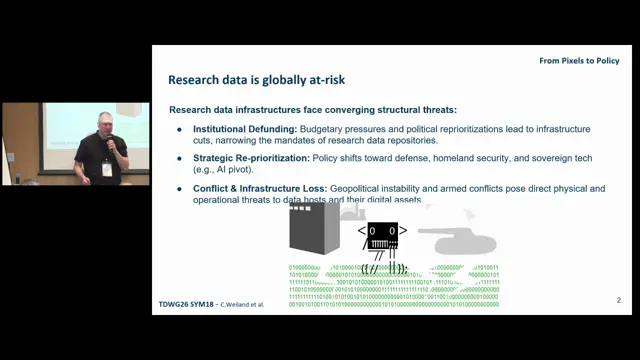
Packaging data with its semantics, provenance and machine-readable policy as FAIR Digital Objects makes it rescue-ready and redeployable elsewhere.

Claus Weiland
talk · 22 Sept · 09:35–⁠09:47 · ODIN

The GBIF data index: crawling and crawled

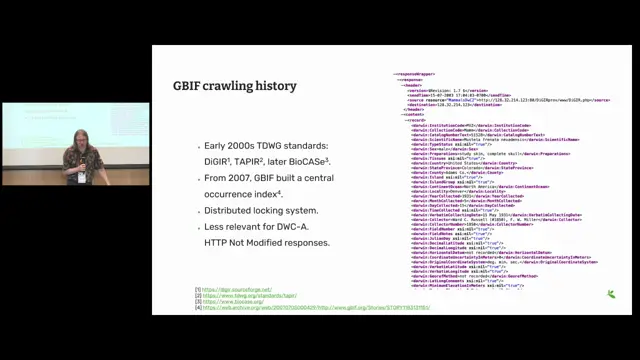
AI-era crawling through residential proxies is a new, hard-to-block load that is forcing open biodiversity infrastructures and their publishers to spend effort on defence.

Matthew Blissett
talk · 22 Sept · 09:47–⁠09:59 · ODIN

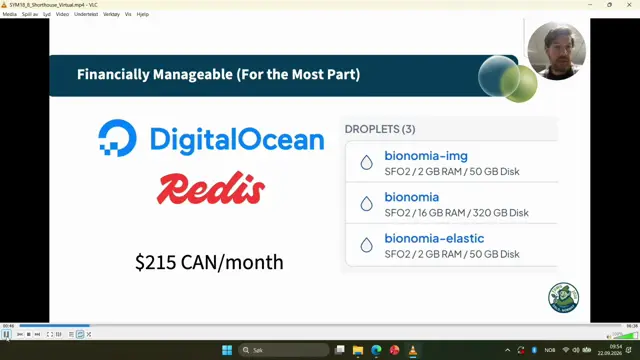
Resilient Attribution Infrastructures for Biodiversity Science: Archiving and Risk Mitigation in Bionomia

Small niche infrastructures can be resilient by planning for their own end: keep things simple and push versioned data and reusable code outward.

David Shorthouse
discussion · 22 Sept · 09:59–⁠10:30 · ODIN

SYM18 discussion: who sustains biodiversity data infrastructures?

Volunteer and single-developer infrastructures deliver proven value, but the community lacks mechanisms and funding to protect them.

Eva Alonso, Giuditta Parolini
talk · 22 Sept · 11:05–⁠11:20 · ODIN

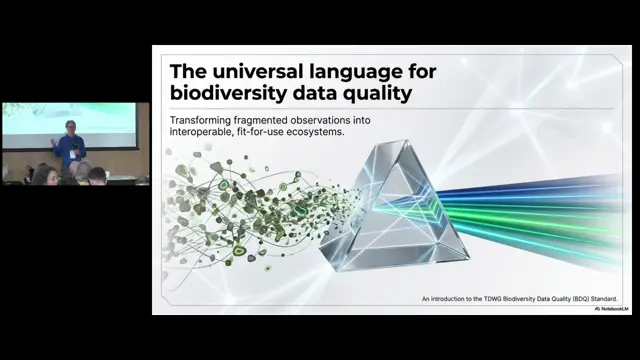
An Introduction to the Biodiversity Data Quality Standard (BDQ)

BDQ provides 110 standard, use-case-linked tests so that data quality can be assessed consistently from collection to aggregation.

Lee Belbin
talk · 22 Sept · 11:20–⁠11:34 · ODIN

GBIF Rule Based Annotations

Simple, scoped negative-range rules let non-experts flag suspicious GBIF occurrences persistently, including future records.

John Waller
talk · 22 Sept · 11:34–⁠11:48 · ODIN

Interpreting the Responses from BDQ Tests

Every BDQ test returns a status, result and comment, and understanding these lets users decide fitness for their own use.

Arthur Chapman
talk · 22 Sept · 11:48–⁠12:02 · ODIN

The Swedish experience on verification and how to improve quality on observations

Human verification remains essential, and the community needs a standard to exchange verification status between systems.

Mora Aronsson
talk · 22 Sept · 12:02–⁠12:16 · ODIN

Transitivity Failures in Taxonomic Name Resolution: Implications for Botanical Dataset Construction

Always keep original verbatim names so datasets can be re-resolved against the latest taxonomy.

Adam Richard-Bollans
talk · 22 Sept · 12:16–⁠12:30 · ODIN

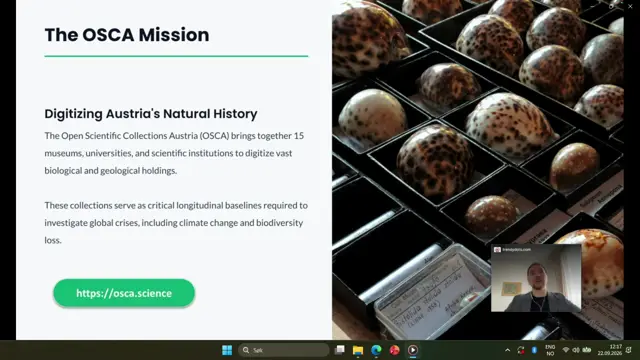
How Darwin Core enables harmonizing Biodiversity Data via the OSCA Consortium

A shared Darwin Core-based cloud pipeline lets 15 Austrian institutions of very different IT capacity publish harmonised specimen data.

Cristian-Dan Bara
talk · 22 Sept · 14:00–⁠14:15 · ODIN

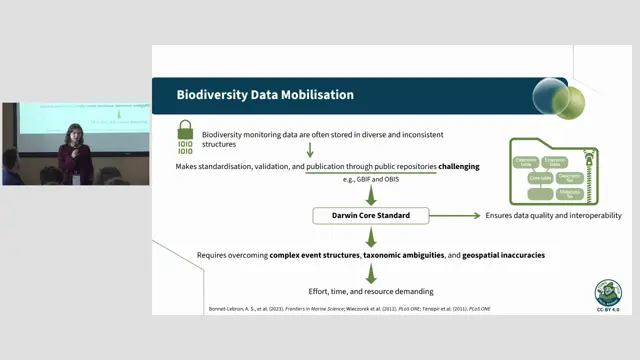
AURORA - A Shiny app designed to create Darwin Core Archives from messy biodiversity datasets

AURORA lowers the barrier to Darwin Core publication by guiding researchers step by step from messy tables to standard-compliant tables and metadata.

Sara Araújo
talk · 22 Sept · 14:15–⁠14:30 · ODIN

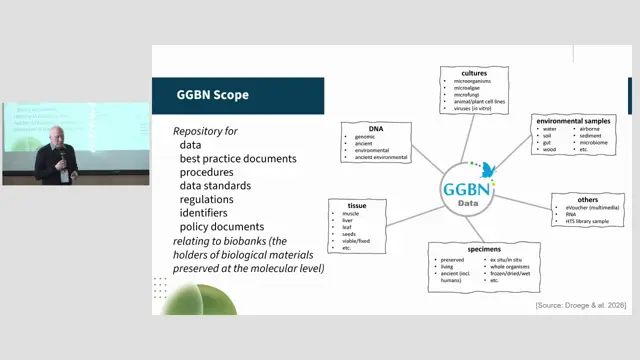
Rebuilding core functionalities of the GGBN system: taxonomic alignment with international research infrastructures

GGBN is rebuilding transparent automated name parsing and matching on GBIF parsing and ChecklistBank/Catalogue of Life XR to improve sample discovery.

Walter Berendsohn
talk · 22 Sept · 14:30–⁠14:45 · ODIN

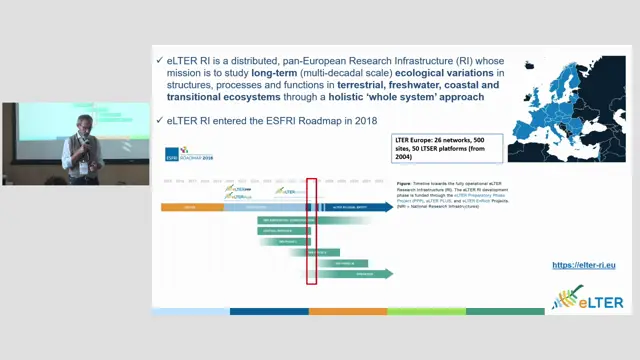
Bridging eLTER Data Reporting Format: enabling interoperable biodiversity and ecological data publication across research infrastructures

eLTER is aligning its CSV-based data reporting format with Darwin Core and Frictionless data packages to make long-term ecological data more FAIR.

Alessandro Oggioni
talk · 22 Sept · 14:45–⁠15:00 · ODIN

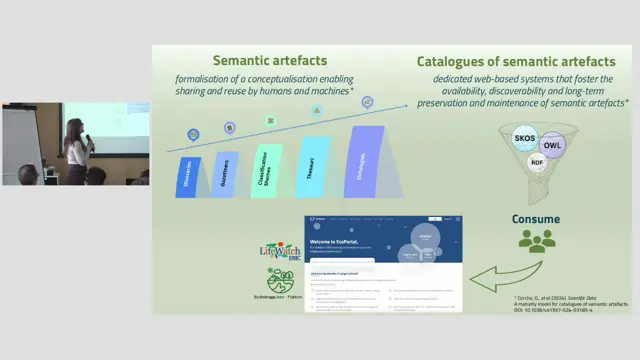
Infrastructure-driven solutions to strengthen semantic interoperability in ecology

A federated terminology service over 28 catalogs plus community alignments tackles the fragmentation of ecological vocabularies.

Cristina Di Muri
talk · 22 Sept · 15:00–⁠15:15 · ODIN

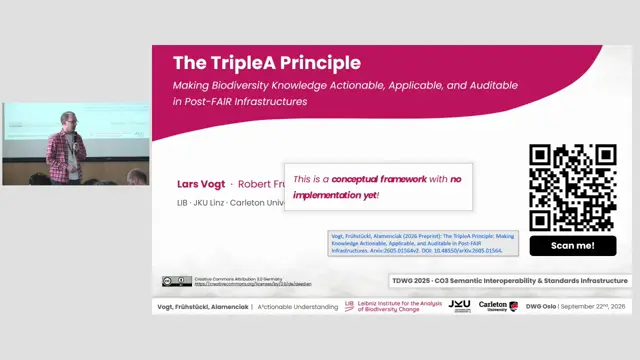
The Triple A Principle: actionability, applicability and auditability for actionable biodiversity knowledge

Actionable biodiversity knowledge needs procedural content with explicit applicability conditions and evidence, not just FAIR metadata.

Lars Vogt
talk · 22 Sept · 15:15–⁠15:30 · ODIN

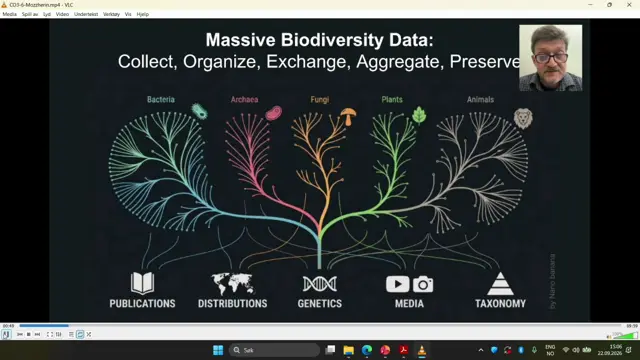
SFBorg: a frictionless biodiversity data exchange

Using an SQLite schema as the exchange format lets biodiversity datasets be used instantly by applications without import.

Dmitry Mozzherin
talk · 22 Sept · 16:05–⁠16:11 · ODIN

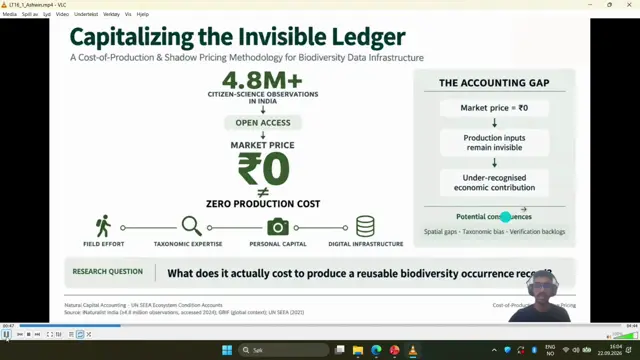
Capitalizing the Invisible Ledger: A Cost-of-Production and Shadow Pricing Methodology for Valuing Open-Source Biodiversity Assets in India

Open access removes the price of biodiversity data, not its production cost; citizen science is under-recognised national data infrastructure.

Ashwin A
talk · 22 Sept · 16:17–⁠16:23 · ODIN

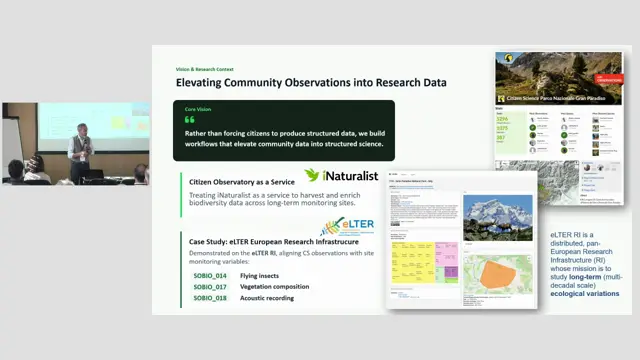
From citizen observations to long-term ecological knowledge: integrating iNaturalist records into LTER framework through automated enrichment

Rather than forcing citizens to produce structured data, automated enrichment elevates iNaturalist records into research-ready data for eLTER sites.

Alessandro Oggioni
talk · 22 Sept · 16:23–⁠16:30 · ODIN

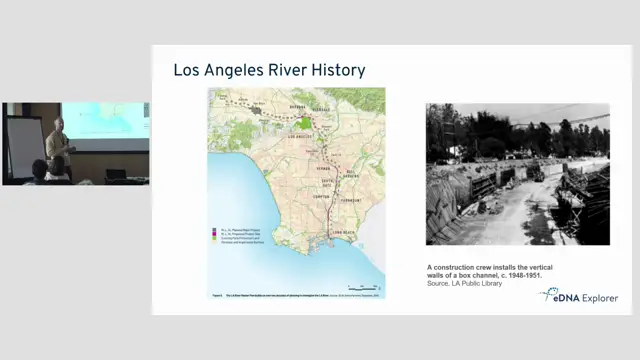
An eDNA Platform for Community-Powered LA River Restoration

An eDNA analysis platform let community groups without bioinformatics expertise measure how river channelization shapes biodiversity.

Ryan Martin
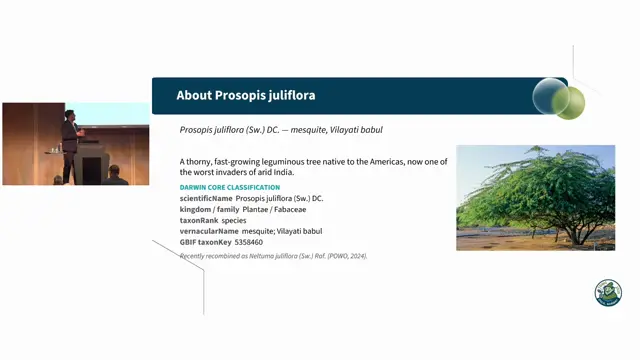
talk · 22 Sept · 16:30–⁠16:36 · ODIN

Ground-Truth from the Ground Up: Community-Led Occurrence Data for Prosopis juliflora Restoration in Kutch's Climate-Stressed Drylands

Community ground-truthing through voice-based, local-language tools makes satellite invasive-species maps reliable and restoration locally owned.

Pranav Jha
talk · 22 Sept · 16:35–⁠16:40 · ODIN

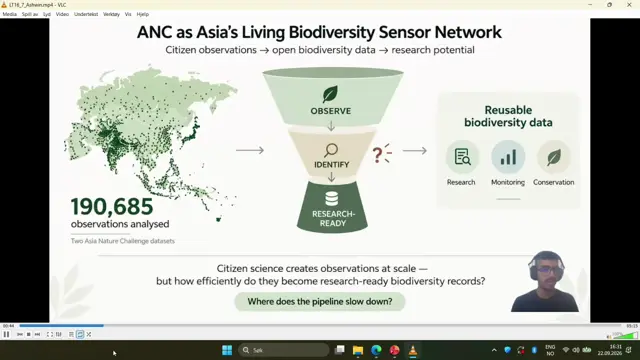
The Asian Nature Challenge as a Beacon of Citizen Science: Regional Contributions, Macroecological Data Networks, and Strategies for Optimizing Taxonomic Identification Efficiency in India

More observations do not mean more usable data; identification capacity is the bottleneck for India's citizen science.

Ashwin A
talk · 22 Sept · 16:36–⁠16:42 · ODIN

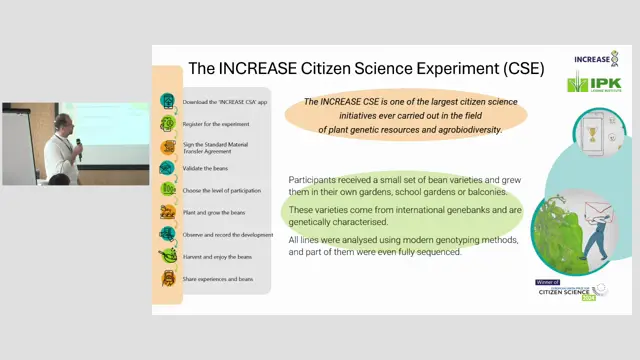
Growing Together: Community-Driven Conservation of Plant Genetic Resources

Giving citizens seeds, a good app and clear tutorials can yield large phenotypic datasets and community-based conservation of crop diversity.

Markus Oppermann
talk · 22 Sept · 08:30–⁠08:32 · SAL A

Introduction to the AI for Biodiversity Data session: what machine learning and LLMs actually do

LLMs are word predictors with no notion of truth, so their outputs, including hallucinations, cannot be objectively scored from the text alone.

David Williamson
talk · 22 Sept · 08:57–⁠09:09 · SAL A

Delivering AI for biodiversity data in the public sector: data handling, security and humans-in-the-loop when small teams build at pace

Small public-sector teams can use AI tools productively if they set clear boundaries between prototype, dev, test and production and keep expert humans in the loop.

Rachel Wiles
talk · 22 Sept · 09:09–⁠09:21 · SAL A

Scalable Edge AI for Real-Time Biodiversity Monitoring: tracking invasive plant species in roadside imagery

Distilling a tiling-based plant identifier into a single ConvNeXt model makes high-resolution roadside invasive-species monitoring fast, cheap and more accurate.

Giulio Martellucci
talk · 22 Sept · 09:21–⁠09:33 · SAL A

AI-vision for integrated management of pest insects and their natural enemies

Moving precision spraying from static weeds to mobile pests and their natural enemies is blocked mainly by the difficulty of collecting representative image data.

Ritter Guimapi
talk · 22 Sept · 09:33–⁠09:45 · SAL A

Soundscape China: Listening to the Sounds of Nature with AI

Soundscape China is building a nationwide acoustic sensor network, database and AI models, gathering 3.6 million recordings in its first year.

Congtian Lin
talk · 22 Sept · 09:45–⁠09:57 · SAL A

Cross-Modal Coordination for Biodiversity Monitoring at Scale: Lessons from SmartWilds

Coordinating multiple sensor modalities with AI at the far edge, informed by synchronised multimodal datasets like SmartWilds, can scale and adapt biodiversity monitoring.

Jenna Kline
talk · 22 Sept · 09:57–⁠10:09 · SAL A

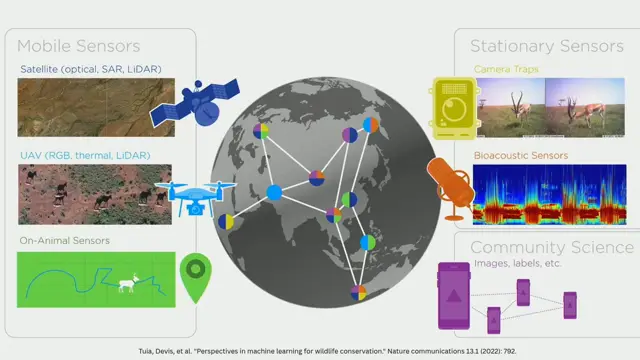
Trapper 2.0: scalable, open-source platform for managing camera trapping projects with integrated AI pipelines

Trapper 2.0 offers an open, model-agnostic, edge-deployable pipeline for camera trap photos and videos with expert review and Camtrap DP export.

Karolina Kuczkowska
talk · 22 Sept · 11:03–⁠11:15 · SAL A

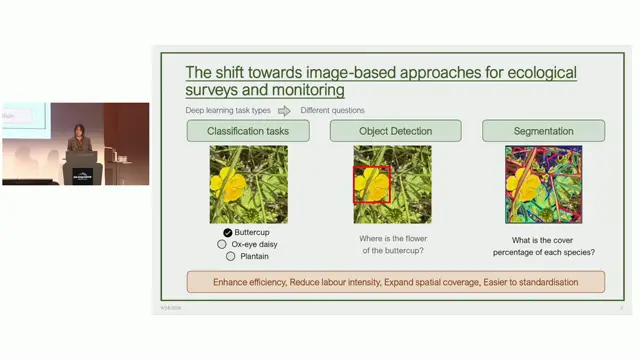
Are plant image datasets ready for AI-enabled community assessment? A systematic review of bias, representativeness and annotation quality

Current plant image datasets are not yet ready for AI-enabled ecological monitoring, especially for spatially explicit tasks and annotation quality.

Yuchen Zhao
talk · 22 Sept · 11:15–⁠11:27 · SAL A

The WildLIVE Portal: Towards Scalable Wildlife Monitoring through the Integration of Citizen Science and Human-in-the-Loop AI Workflows

WildLIVE combines a model registry, provenance-tracked human verification and FAIR publication to move camera trap data from raw images to publishable data.

Rajapreethi Rajendran
talk · 22 Sept · 11:27–⁠11:39 · SAL A

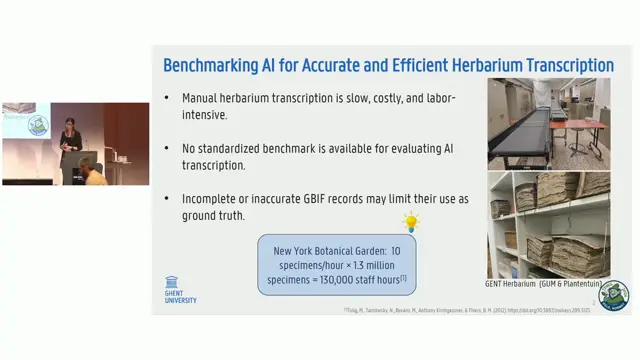
HerbAudit: Validating AI-Driven Herbarium Transcriptions

HerbAudit shows AI herbarium transcription reaching ~94% accuracy and provides a fair, field-aware way to benchmark it.

Dilara Ağacık
talk · 22 Sept · 11:39–⁠11:51 · SAL A

AI-assisted digitisation of printed identification keys: from book to structured data in minutes

An agentic LLM pipeline can turn printed keys and descriptions into a structured draft identification key for tens of dollars, shifting experts from transcribers to reviewers.

Wouter Koch
talk · 22 Sept · 11:51–⁠12:03 · SAL A

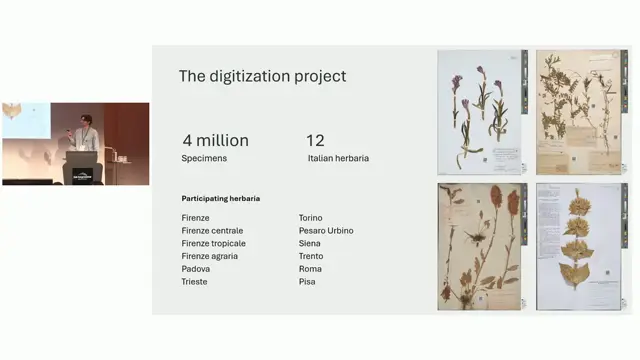
AI-assisted georeferencing a posteriori of herbarium specimens: a case study on Italian herbaria

Combining LLM parsing and LLM judging with gazetteers more than doubles correct georeferences for historical herbarium localities compared with Google Maps, even with a local model.

Matteo Conti
talk · 22 Sept · 12:03–⁠12:15 · SAL A

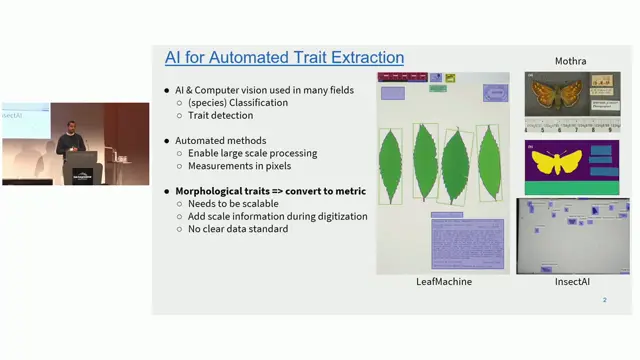
Towards Scalable Trait Measurements from Digitized Specimens

Matching rulers to an annotated reference set lets specimen images be calibrated to real-world units with under 1% error in 96% of cases.

Kenzo Milleville
talk · 22 Sept · 14:00–⁠14:10 · SAL A

Introduction: Reimagining BHL

BHL at 20 has a new independent foundation but an unsecured future, and the symposium seeks ideas to shape what comes next.

Nicole Kearney
talk · 22 Sept · 14:10–⁠14:25 · SAL A

Reconsidering the original vision for a global biodiversity information facility

GBIF achieved its 1999 vision only partially and through a network of collaborating infrastructures; the community must decide whether that is enough and articulate the next vision.

Joe Miller
talk · 22 Sept · 14:25–⁠14:40 · SAL A

For the Birds: Adapting Archives and Extracting Data for the Biodiversity Heritage Library

USF is strengthening BHL's infrastructure via a redundant Macaw ingest instance while working to bring vulnerable Florida environmental archives and their data into BHL.

Amanda Boczar, Sydney Jordan
talk · 22 Sept · 14:40–⁠14:55 · SAL A

BHL and the Planetary Knowledge Base: Structuring Biodiversity Literature for the Next Generation

NHM is re-OCRing all of BHL with modern models and extracting entities into a knowledge graph, with confidence gating to protect BHL data quality.

Qianqian Hiris Gu
talk · 22 Sept · 14:55–⁠15:10 · SAL A

Possibilities to enhance the semantic navigation of BHL: further developing the 'unit of work'

Letting user communities carve BHL into branded, pre-filtered 'hosted portals' could serve diverse needs, satisfy funders and drive innovation.

Nicky Nicolson
discussion · 22 Sept · 15:10–⁠15:30 · SAL A

SYM08A closing discussion: sustaining and connecting the BHL ecosystem

Focusing on core functions made GBIF and BHL successful; sustaining the connected ecosystem now requires clear value statements and machine interfaces such as MCP servers.

Nicole Kearney
talk · 22 Sept · 16:05–⁠16:15 · SAL A

Biological occurrence data from historic scientific correspondence: enabling automated approaches for structured data extraction from body text

A Darwin Core-aligned annotated corpus from MfN journals provides a reference for evaluating automated occurrence extraction from historical texts.

Christian Bölling
talk · 22 Sept · 16:15–⁠16:25 · SAL A

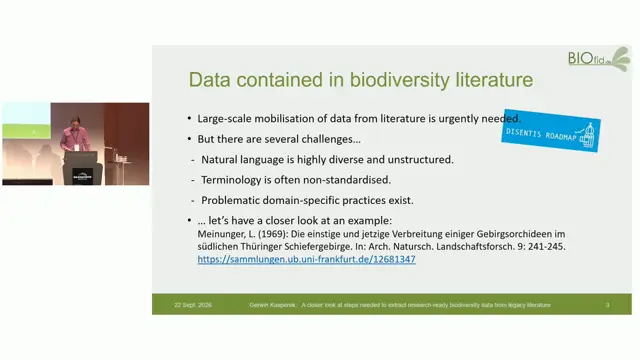
A closer look at steps needed to extract research-ready biodiversity data from legacy literature

Legacy literature data can only be unlocked by combining better OCR/NLP with taxonomic rigour that accounts for synonymy, shifting concepts, coreference and mixed languages.

Gerwin Kasperek
talk · 22 Sept · 16:25–⁠16:35 · SAL A

Multimodality for Knowledge Extraction from Historical Entomology Literature

Aligning text and illustrations in a multimodal knowledge graph can generate evidence-grounded captions and recover knowledge lost by text-only extraction.

Jana Hoffmann, Sefika Efeoglu
talk · 22 Sept · 16:35–⁠16:45 · SAL A

Future interfaces for BHL

Modern AI tools make new BHL interfaces feasible now (better OCR, image and map search, chatbots); the community must decide which are worth building.

Roderic Page
discussion · 22 Sept · 16:45–⁠17:00 · SAL A

SYM08B discussion: extracting geography and articles from BHL

Article-level discoverability and geographic extraction are key BHL gaps that AI may now make tractable, but resourcing remains the constraint.

Nicole Kearney, Roderic Page
talk · 22 Sept · 08:30–⁠08:45 · SAL B

Role-Based Access Control (RBAC) for RASD: The Flemish Biodiversity Portal Approach

The Flemish portal implements restricted access through role-based access control, with institutions rather than the portal team deciding who may see high-resolution data.

Dimitri Brosens
talk · 22 Sept · 08:45–⁠09:00 · SAL B

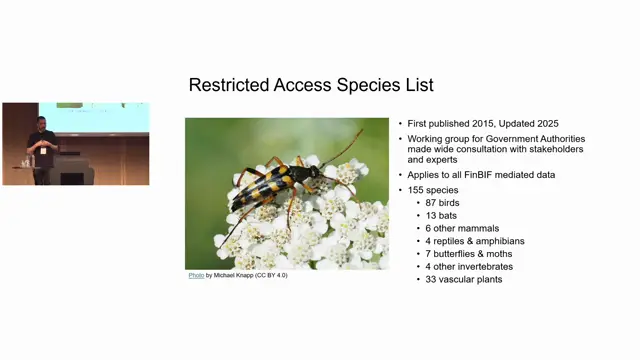
Restricted access species data in Finland

FinBIF applies an authority-maintained restricted species list to all mediated data, but lacks a standard way to share what it restricted and why.

Will Morris
talk · 22 Sept · 09:00–⁠09:15 · SAL B

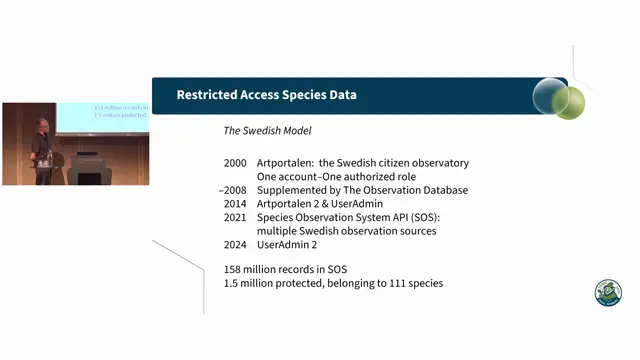
Restricted Access Species Data: The Swedish Model

Sweden combines a long-running role system, diffusion classes and a yes/no 'signal search' to manage 1.5 million protected records while gradually restricting fewer species.

Johan Liljeblad
talk · 22 Sept · 09:15–⁠09:30 · SAL B

Toward RASD Implementation in Brazil: Integrating Conservation, Open Data, and Traditional Knowledge Safeguards

Protecting traditional knowledge requires community-controlled, attribute-level and semi-restricted access, not just hiding species locations.

Clara Baringo Fonseca
talk · 22 Sept · 09:30–⁠09:45 · SAL B

The Edge: Insights into problems that arise from implementing data solutions for restricted access (sensitive) species data

Plan RASD treatments carefully, because taxonomy, data errors and associated records can silently defeat simple rules like 'generalise to 10 km'.

Cameron Slatyer
talk · 22 Sept · 09:45–⁠10:00 · SAL B

Using wildlife trade data to support proactive RASD decision-making

Wildlife trade data can act as an early warning system to protect species' locality data before formal conservation assessments catch up.

Charlotte Lassaline
talk · 22 Sept · 10:00–⁠10:15 · SAL B

A new standard for restricted access (sensitive) species data

A proposed Darwin Core extension would record why data were restricted and what treatment was applied, in a one-to-many way similar to MeasurementOrFact.

Tania Laity
discussion · 22 Sept · 10:15–⁠10:30 · SAL B

SYM23 panel discussion on restricted access species data

Restricting data is costly and imperfect; panellists argued for targeted, 'shrink-wrapped', well-justified restrictions handled centrally rather than blanket redaction.

Cameron Slatyer, Dimitri Brosens
talk · 22 Sept · 11:00–⁠11:15 · SAL B

Open Digital Curation Needs: openness, interoperability, provenance

Open digital curation increases transparency, agency and trust and reduces latency, but needs new provenance practices for AI.

Deborah Paul
talk · 22 Sept · 11:15–⁠11:30 · SAL B

Machine-Ready Botanical Data: Mapping Integrated Collections and Traits with Darwin Core Data Package

Darwin Core Data Package can serve as a semantic integration layer for a botanical garden's diverse collections and trait data, and MBG's draft mapping is offered for community refinement.

Nathan VanderKraats
talk · 22 Sept · 11:30–⁠11:45 · SAL B

From Images to Structured Data: A Scalable AI Workflow for Natural History Museums

A simple 'just do it' AI transcription pipeline with schema prompts, an intent step and full provenance can make label digitisation scale.

Anne Koivunen
talk · 22 Sept · 11:45–⁠12:00 · SAL B

Closing the Loop: The DiSSCo Annotation Validation Framework for Trustworthy Data Round-Tripping

DiSSCo proposes impact-based, layered validation so trusted annotations are promoted automatically and only high-impact ones need expert review.

Wouter Addink
talk · 22 Sept · 12:00–⁠12:15 · SAL B

Geonomia: Metadata and Community for Georeferencing

Clustering specimens into collecting trips makes georeferencing and AI enrichment more efficient and should be done as a community effort.

Nicky Nicolson
talk · 22 Sept · 12:15–⁠12:30 · SAL B

From satellite embeddings to Darwin Core: an open, ensemble-AI workflow for Prosopis juliflora mapping and reusable training-dataset generation

Satellite embeddings plus hyperspectral signatures and ground validation can map invasive Prosopis at scale and generate reusable, attributable training data.

Pranav Jha
talk · 22 Sept · 14:00–⁠14:15 · SAL B

Open Digital Curation and Round-Tripping Biodiversity Data Enhancements Across Collection Infrastructures: Six Years and 50 Million Links in Bionomia

Round-tripping is much harder than expected, and data managers must fully populate identifiedBy so taxonomists' expertise is credited.

David Shorthouse
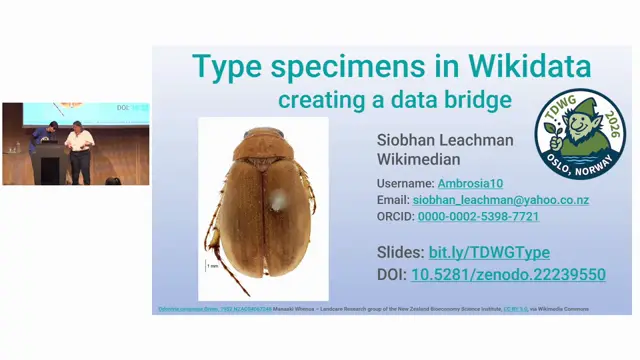
talk · 22 Sept · 14:15–⁠14:30 · SAL B

Type specimens in Wikidata

A consistent Wikidata type specimen model lets anyone link type specimens to collectors, publications, taxa and identifiers as a transparent finding aid.

Siobhan Leachman
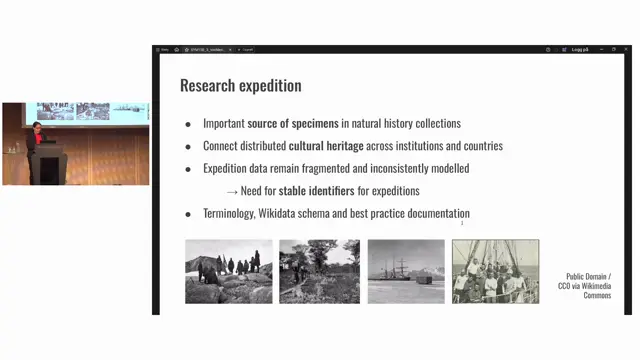
talk · 22 Sept · 14:30–⁠14:45 · SAL B

Here, There, and Everywhere: Modelling Research Expeditions in Wikidata

Treat research expeditions as first-class entities with Wikidata identifiers so distributed specimens, people, publications and archives can be linked.

Sabine von Mering
talk · 22 Sept · 14:45–⁠15:00 · SAL B

Digital curation across the biodiversity data lifecycle, at the node level (SiB Colombia), aggregator level (GBIF) and how to incorporate user feedback

Curation feedback works at every stage of the data lifecycle, and about a third or more of reported issues do get fixed; AI is used cautiously to summarise feedback.

Esteban Marentes Herrera
talk · 22 Sept · 15:00–⁠15:15 · SAL B

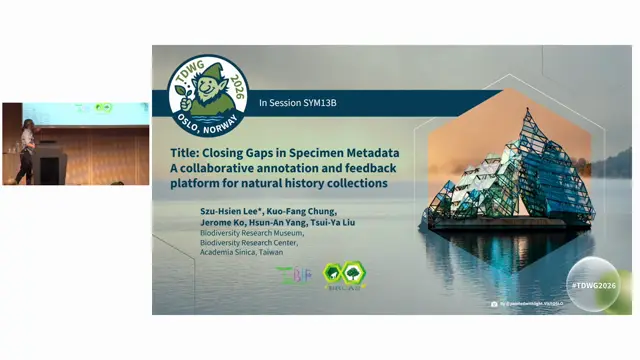
Closing Gaps in Specimen Metadata: A Collaborative Annotation and Feedback Platform for Natural History Collections

A national collaborative annotation platform with AI-assisted transcription can close metadata gaps across many Taiwanese collections.

Szu-Hsien Lee
talk · 22 Sept · 15:15–⁠15:30 · SAL B

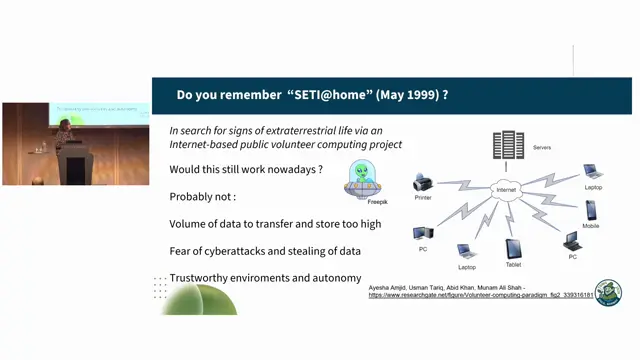
Responsible and GreenAI: Does our community need Gigantic Data Centers to deliver?

Biodiversity researchers mostly need AI-ready data rather than giant data centres, and AI use should be weighed against its environmental cost.

Patricia Mergen
talk · 22 Sept · 16:05–⁠16:10 · SAL B

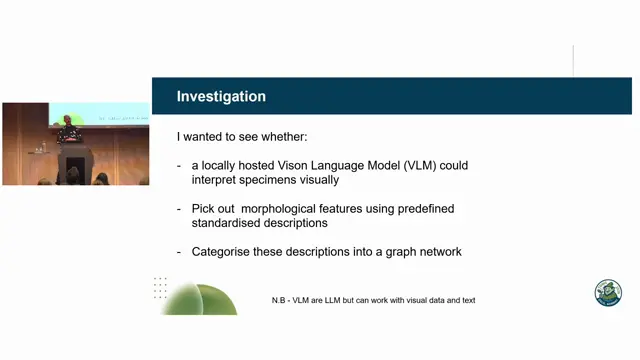
Agentic AI Systems for Specimen Interaction and Camera-Based Observation

Off-the-shelf local vision language models can pick out and count specimen morphology and spot damage with minimal guidance.

Jack Hollister
talk · 22 Sept · 16:10–⁠16:15 · SAL B

Rediscovering Archives - Using LLM's for the Transcription and Extraction of Ecological Data from Historical Archives

Off-the-shelf multimodal LLMs can transcribe varied handwritten archives well, with closed models more robust on structured tables.

Phoebe Santos
talk · 22 Sept · 16:15–⁠16:20 · SAL B

Semantic Governance and Knowledge Organization in AI-Augmented Biodiversity Infrastructures

AI-generated biodiversity knowledge must be provenance-aware and anchored in shared vocabularies, making AI-assisted rather than AI-directed curation.

Andrew Jones
talk · 22 Sept · 16:20–⁠16:25 · SAL B

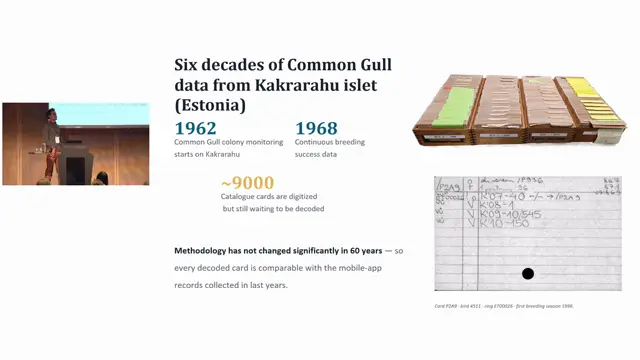
KakraCards: An AI-Assisted Pipeline for Liberating Six Decades of Seabird Heritage Data

Multi-model consensus with human adjudication builds ground truth and picks the best LLM for transcribing standardised historical cards.

Kristjan Adojaan
talk · 22 Sept · 16:25–⁠16:30 · SAL B

Data Quality in Focus: Bridging the Biodiversity Data Gap for Sustainable Finance

Biodiversity assessments for finance need local data; a tiered data-quality hierarchy like carbon accounting could make them credible.

Emma Granqvist
talk · 22 Sept · 16:30–⁠16:35 · SAL B

Robots Rapidly Writing Records: Machine Annotations at Scale with DiSSCo

DiSSCo can now run adapted machine annotation services over whole datasets, pointing to an image-to-verified-data digitisation pipeline.

Soulaine Theocharides
talk · 22 Sept · 16:35–⁠16:40 · SAL B

From Collection Drawers to AI - A One-Week Recipe

A useful AI-ready digitisation setup can be built in a week from recycled materials and borrowed cameras.

Arianna Salili-James
talk · 22 Sept · 16:45–⁠16:50 · SAL B

kabr-tools: A Modular Workflow for Automated Video-Based Behavioral Monitoring Across the Autonomy Spectrum

kabr-tools offers a modular, model-agnostic pipeline from drone or camera-trap video to ecological behaviour analysis.

Jenna Kline
discussion · 22 Sept · 16:50–⁠17:00 · SAL B

LT17 closing Q&A: AI hallucinations, validation and lightning-talk format

Validation of large-scale AI output remains open; for ML classifiers, accuracy should be judged on the ecological task rather than benchmark metrics.

Jack Hollister, Haris
talk · 22 Sept · 08:35–⁠08:50 · SAL C

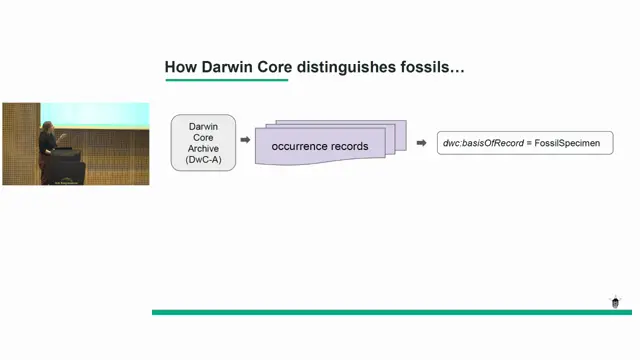
A community-curated controlled vocabulary for fossil collections using dwc:materialEntityType

A granular, community-derived vocabulary for dwc:materialEntityType would let users filter fossil records by what the material actually is, which basisOfRecord cannot do.

Holly Little
talk · 22 Sept · 08:50–⁠09:05 · SAL C

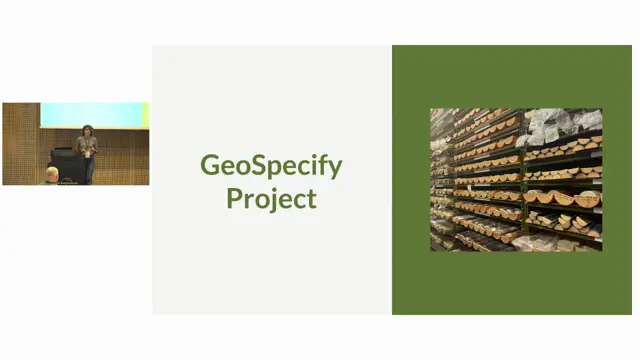
Extending Specify 7 for geological collections (GeoSpecify)

GeoSpecify brings geology into the same Specify data model as biological collections, with purpose-built age, stratigraphy and composite-object features.

Theresa Miller
talk · 22 Sept · 09:05–⁠09:20 · SAL C

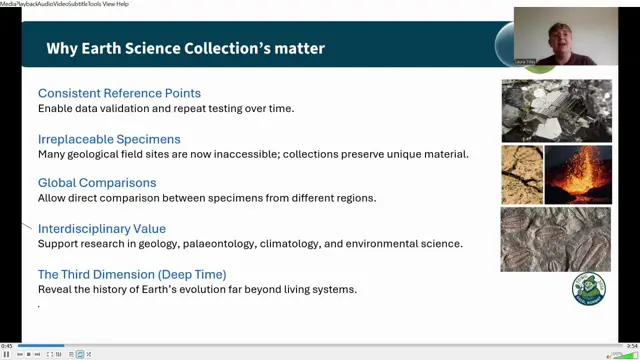
Improving access to Earth science collections data via GeoCASe and the European Open Science Cloud (GeoDARA)

Linking specimen-rich GeoCASe records to dataset-level DCAT descriptions could let deep-time collection data feed modern environmental observation infrastructures.

Laura Tilley
talk · 22 Sept · 09:20–⁠09:35 · SAL C

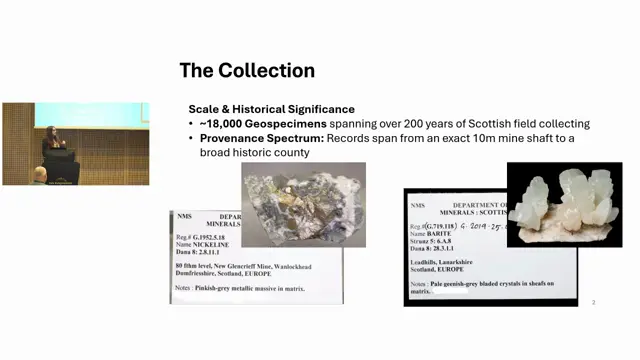
Improving geospecimen provenance and findability in the National Museums Scotland Scottish mineral collection

A scripted, reviewable workflow can quickly reconcile legacy mineral records and enrich them with Mindat coordinates, while giving data back to the community resource.

Sarah Stewart
talk · 22 Sept · 09:35–⁠09:50 · SAL C

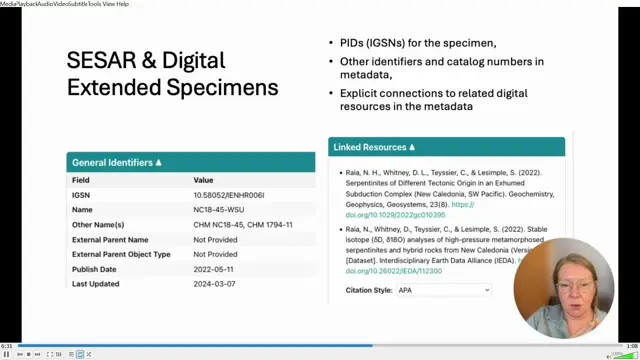
Bridging domains: how SESAR supports Earth and biodiversity digital extended specimens

Persistent sample identifiers plus linked metadata propagated to DataCite let samples be connected to their derived research products across Earth and biodiversity domains.

Andrea Thomer
talk · 22 Sept · 09:50–⁠10:05 · SAL C

Developing and implementing a relational mineral taxonomy model in EMu for Museums Victoria's mineral collection

Linking catalogue records to shared, Mindat-populated mineral taxonomy records makes mineral identification data consistent and queryable.

Oskar Lindenmayer
talk · 22 Sept · 10:05–⁠10:20 · SAL C

Understanding geological specimen use for effective digitisation strategies

Evidence from inquiries, loans and publications shows geological specimens have diverse, sometimes unexpected uses, which should shape which data are digitised first.

Rachel Walcott, Adam Mansur
discussion · 22 Sept · 10:20–⁠10:30 · SAL C

Session discussion: mineralogy extension and MIDS geology rules

Geology collections now have concrete standards moments to engage with: the mineralogy extension ratification and the MIDS public review.

Ben Norton, Adam Mansur
talk · 22 Sept · 11:00–⁠11:15 · SAL C

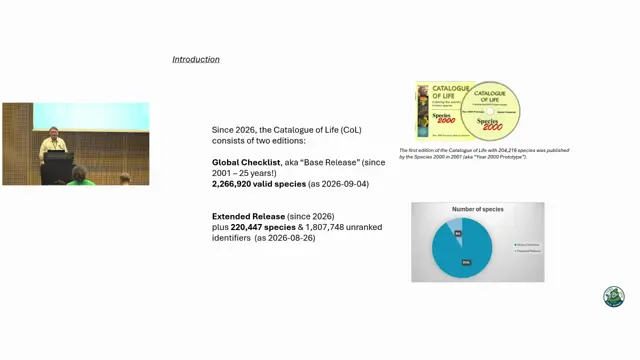
The United States contribution to the global taxonomy of the Catalogue of Life in the first quarter of the 21st century

US experts and platforms supply over a third of the Catalogue of Life, and the next step is an identifier-based infrastructure passing unchanged IDs between databases.

Yury Roskov
talk · 22 Sept · 11:15–⁠11:30 · SAL C

A knowledge organisation system for taxonomic data

Separating taxon data into layers with immutable taxon concepts at the centre gives a practical path to implementing TCS and fixing checklist quality problems.

Niels Klazenga
talk · 22 Sept · 11:30–⁠11:45 · SAL C

Managing observations when taxonomy changes: the case of Artportalen and Dyntaxa

Concept-based taxon IDs with traceable history let a large observation system absorb taxonomic change pragmatically.

Johan Liljeblad
talk · 22 Sept · 11:45–⁠12:00 · SAL C

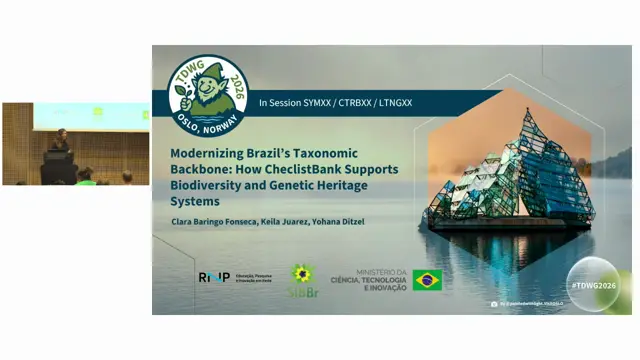
Modernizing Brazil's taxonomic backbone: how ChecklistBank supports biodiversity and genetic heritage systems

ChecklistBank lets a small national node assemble one consistent taxonomic backbone for legal, portal and permitting systems.

Clara Baringo Fonseca
talk · 22 Sept · 12:00–⁠12:15 · SAL C

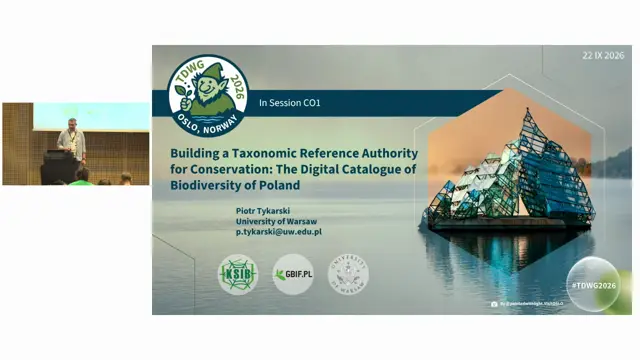
Building a taxonomic reference authority for conservation: the Digital Catalogue of Biodiversity of Poland

Poland now has an expert-maintained, fully referenced national checklist published through GBIF and ChecklistBank.

Piotr Tykarski
talk · 22 Sept · 12:15–⁠12:30 · SAL C

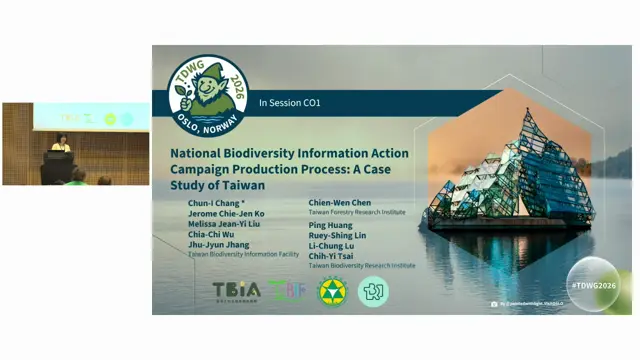
National Biodiversity Information Action Campaign production process: a case study of Taiwan

Taiwan's second national plan reframes biodiversity information infrastructure around resilience, with shared taxonomic references as a cornerstone of interoperability.

Chun-I Chang, Jerome
talk · 22 Sept · 14:00–⁠14:15 · SAL C

Metadata matters: perceptions on the implementation of Darwin Core in the biocollections cyberinfrastructure

Standardisation through Darwin Core can mask nuance, and practitioners report complex data, missing guidelines and limited capacity as the main implementation barriers.

Bradley Wade Bishop
talk · 22 Sept · 14:15–⁠14:30 · SAL C

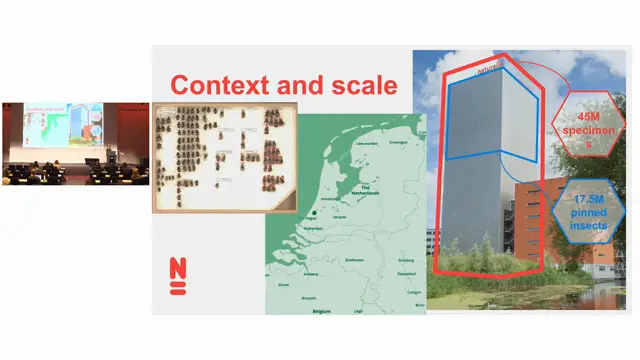
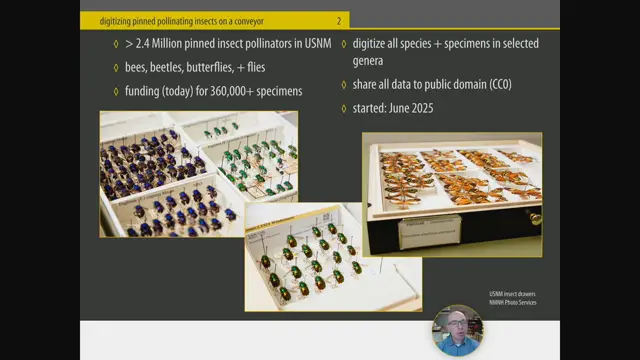
Pinned insect digitization conveyor: image and data transcription workflows

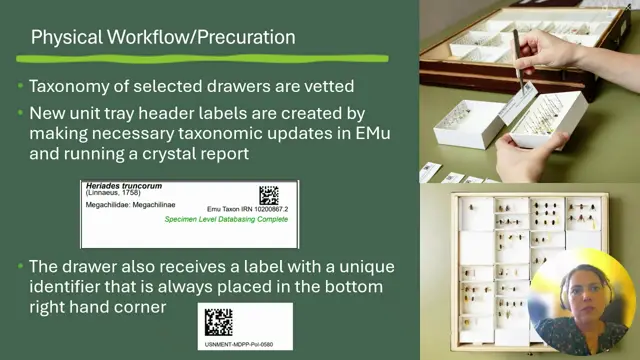
An industrial conveyor workflow with QR-encoded metadata and automated skeletal records makes mass digitisation of pinned insects feasible.

Jessica Bird, Sylvia Orli
talk · 22 Sept · 14:30–⁠14:45 · SAL C

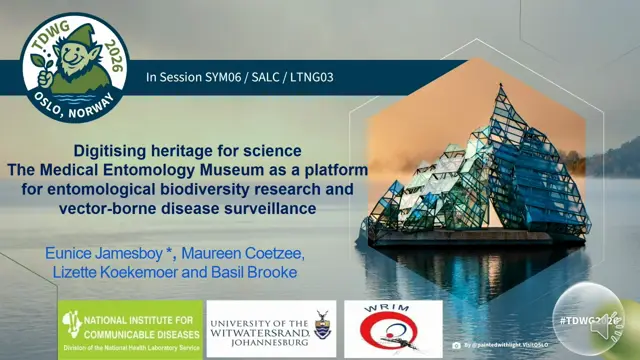
Digitising heritage for science: the Medical Entomology Museum as a platform for entomological biodiversity research and vector-borne disease surveillance

Digitised historical mosquito vouchers become reusable evidence that gives context to current vector surveillance.

Eunice Jamesboy
talk · 22 Sept · 14:45–⁠15:00 · SAL C

X-raying wild plant seeds: preparing images for future AI-driven global biodiversity research

Adding scale and linking legacy seed X-rays to collection records turns an inaccessible archive into AI-ready research data.

Robert Turner
talk · 22 Sept · 15:00–⁠15:15 · SAL C

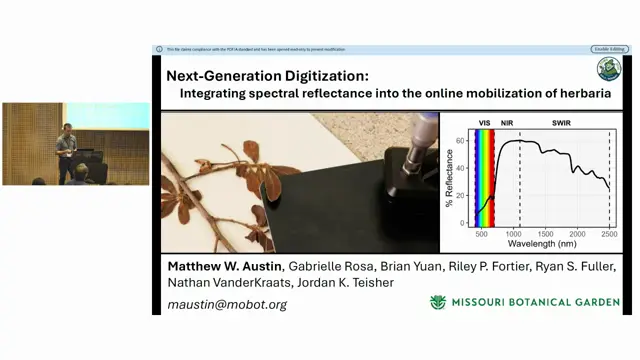
Next-generation digitization: integrating spectral reflectance into the online mobilization of herbaria

Spectral reflectance can be captured at scale during herbarium digitisation and supports accurate species identification from leaves alone.

Matthew Austin
talk · 22 Sept · 15:15–⁠15:30 · SAL C

Experience of collaborative management of the World Auchenorrhyncha Database in TaxonWorks

TaxonWorks turned a personal taxonomic database into a collaborative, well-connected resource feeding Catalogue of Life, GBIF and iNaturalist.

Dmitry Dmitriev
talk · 22 Sept · 16:00–⁠16:15 · SAL C

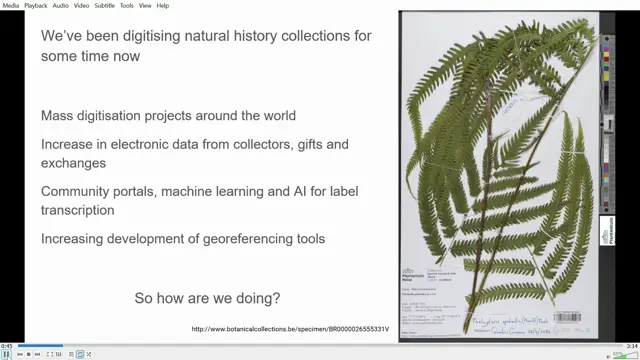
How is digitisation doing? Monitoring the increase in digitised collections using MIDS

MIDS can monitor global digitisation progress, and GBIF data show completeness improving unevenly and sometimes going backwards.

Elspeth Haston
talk · 22 Sept · 16:15–⁠16:30 · SAL C

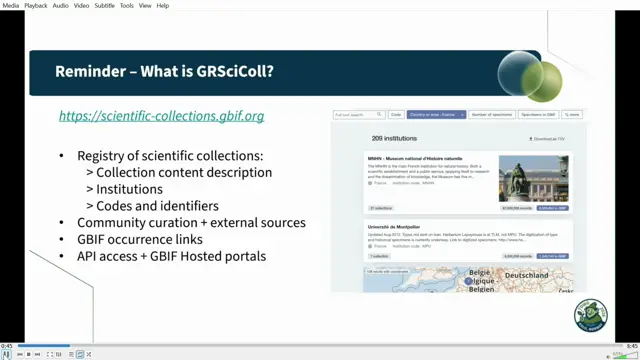
The Latimer Core standard and the Global Registry of Scientific Collections

Latimer Core gives GRSciColl a common language and exchange format for describing collections between free text and specimen records.

Marie Grosjean
talk · 22 Sept · 16:30–⁠16:45 · SAL C

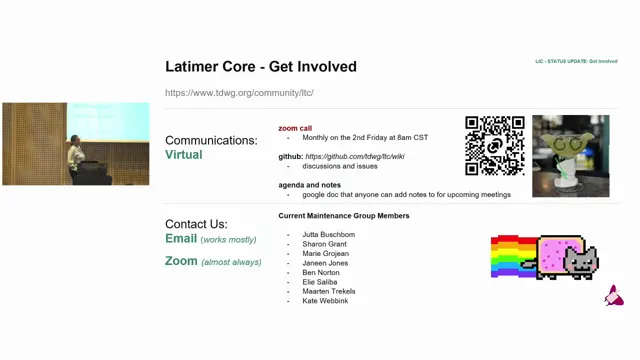
Once and future Latimer Core: status update and open conversation

Latimer Core is being restructured as a data package with unique term IRIs, enabled by TDWG now accepting standards with formal structure.

Sharon Grant
talk · 22 Sept · 16:45–⁠17:00 · SAL C

Assessing record quality and completeness in geoscience collections

Element-level views of MIDS information elements are more useful than raw scores for targeting data improvement in large geoscience collections.

Adam Mansur
talk · 24 Sept · 08:30–⁠08:35 · FORUM

Sustainability and collaboration in a time of uncertainty
Sustaining biodiversity data infrastructure requires treating technology, people and a diversified funding portfolio as one interconnected system.

Libby Ellwood
talk · 24 Sept · 08:35–⁠08:47 · FORUM

GBIF after 25 years

GBIF sustains itself by leveraging stable national contributions into additional funding and by embedding itself in the biodiversity policy and funding architecture.

Joe Miller
talk · 24 Sept · 08:47–⁠08:59 · FORUM

Unifying Natural Heritage for a Resilient Future

DiSSCo's ERIC model and FAIR digital specimen objects are intended to make Europe's specimen data resilient beyond short-term project funding.

Wouter Addink
talk · 24 Sept · 08:59–⁠09:11 · FORUM

Requirements of Sustainability Models for Geo-Biodiversity Data Cyberinfrastructure

Cyberinfrastructure sustainability and ecosystem sustainability go hand in hand, so infrastructure must be designed from the start to track use and support economic orchestration.

José Fortes
talk · 24 Sept · 09:11–⁠09:23 · FORUM

From preservation to perseverance: bridging disciplines for data resilience

Data resilience in a crisis is about prioritisation and mutual aid rather than perfection, and infrastructures need to be kept appropriately visible to be funded.

Andrea Thomer
talk · 24 Sept · 09:23–⁠09:35 · FORUM

NEON, Community Standards, and the Hyper-Extended Specimen

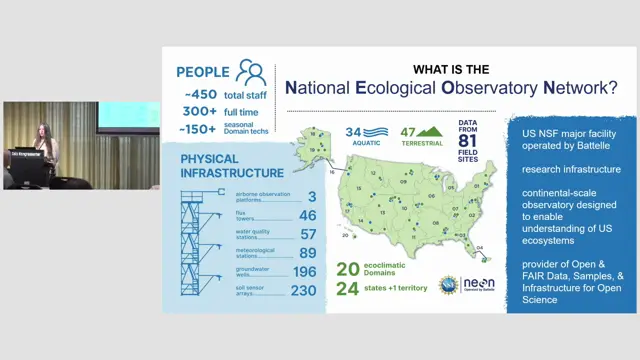
NEON was built for interoperability from the start, but sustaining standards, crosswalks and value-added links needs community-level solutions.

Chandra Earl
talk · 24 Sept · 09:35–⁠09:47 · FORUM

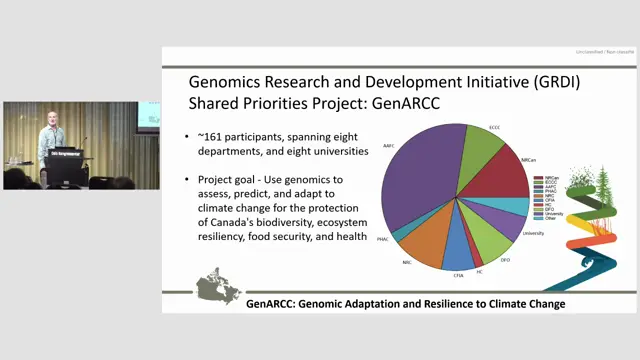
Canada’s need for synthesis for Adaptation and Resilience to Climate Change

Genomic data can only support climate adaptation synthesis if metadata are captured with standards from the start and linked to discoverable infrastructures like GBIF.

James Macklin
talk · 24 Sept · 09:47–⁠09:59 · FORUM

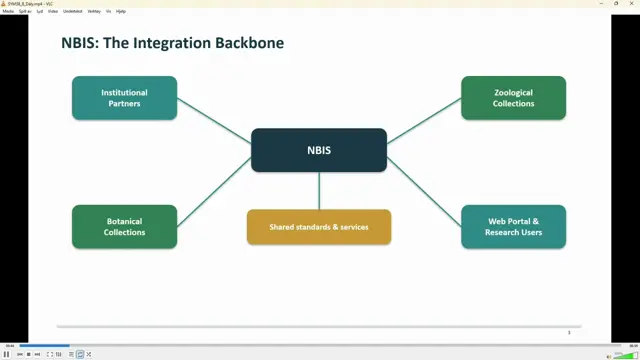
Architecting the National Biodiversity Information System: Standards-Driven Workflows for South Africa’s Botanical and Zoological Data

SANBI sustains NBIS through a statutory mandate plus a roadmap of diversified funding, partnerships and demonstrated return on investment.

Fhatani Ranwashe
discussion · 24 Sept · 10:00–⁠10:30 · FORUM

Symposium discussion: funding models, open data and sustaining biodiversity infrastructure

The community broadly agreed that core data should stay open, but that products, services, credits, regulation and partnerships must become part of sustaining the infrastructure.

Libby Ellwood, James Macklin
talk · 24 Sept · 11:00–⁠11:15 · FORUM

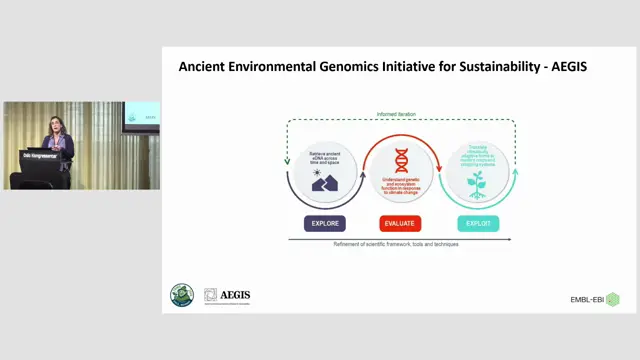
FAIR ancient environmental DNA data in practice: developing and implementing interoperable metadata standards in AEGIS

Community-driven ancient DNA metadata standards, now in MIxS, can make paleogenomic data FAIR and reusable across biodiversity infrastructures.

Joana Pauperio
talk · 24 Sept · 11:15–⁠11:30 · FORUM

Rethinking “absence” in biodiversity data collection and modeling

Separating observation from inference means recording 'detected' and 'not detected' rather than presence and absence.

Rob Stevenson
talk · 24 Sept · 11:30–⁠11:45 · FORUM

Challenges and Opportunities for FAIR Marine eDNA Data Publication Workflows

Making marine eDNA data FAIR is as much about clear, practical, less manual publication processes as about technology.

Berenice Talamantes Becerra
talk · 24 Sept · 11:45–⁠12:00 · FORUM

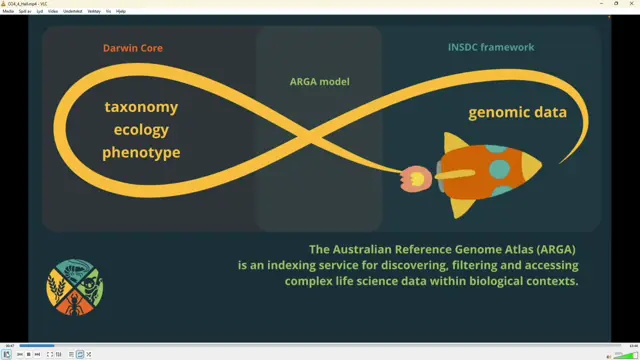
Visualising specimens as event chains on the Australian Reference Genome Atlas

Modelling genomic data as event chains from organism to data product preserves context and provenance that flat records collapse.

Kathryn Hall
talk · 24 Sept · 12:00–⁠12:15 · FORUM

Bridging Biodiversity Data Standards and Predictive Ecology: Operationalizing Interoperable Workflows for Species Distribution Modeling in West Africa

Standards change what enters a modelling pipeline, but workflow design determines whether that difference survives and validation design determines what claims can be made.

Peter Ugege
talk · 24 Sept · 14:02–⁠14:14 · FORUM

The future is the future - thought about access to data in publications

Liberating data from literature works, but the future lies in use-case-driven, digital-first publishing that also targets the undescribed majority of species.

Donat Agosti
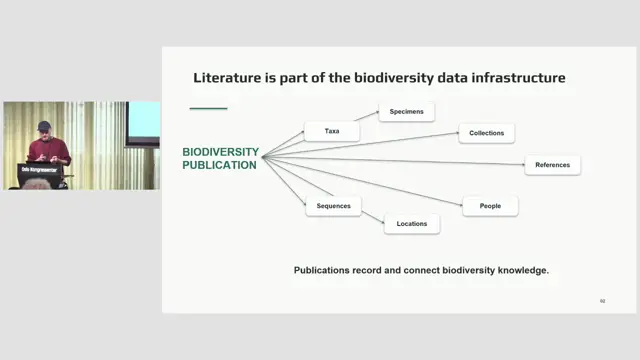
talk · 24 Sept · 14:14–⁠14:26 · FORUM

Biodiversity literature as FAIR and AI-ready data by design (and how to get there)

Don't just liberate biodiversity literature, publish it liberated.

Chris Le Coquet
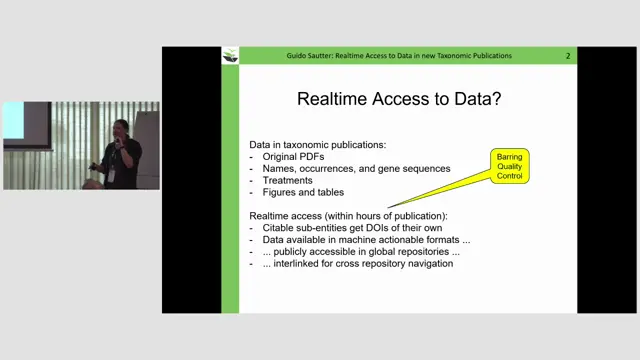
talk · 24 Sept · 14:26–⁠14:38 · FORUM

Realtime Access to Data in new Taxonomic Publications
Plazi can deliver interlinked, machine-actionable data from new taxonomic papers within hours, and XML-first publishing removes most of the costly effort.

Guido Sautter
talk · 24 Sept · 14:38–⁠14:50 · FORUM

Building digital-native species: Transitioning from PDF liberation to semantic-by-design publishing

Keeping data linked and structured from specimen to publication yields FAIR, trusted data on the day of publication.

Laurence
talk · 24 Sept · 14:50–⁠15:02 · FORUM

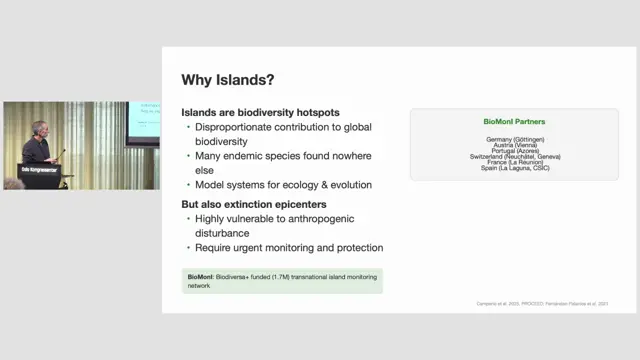
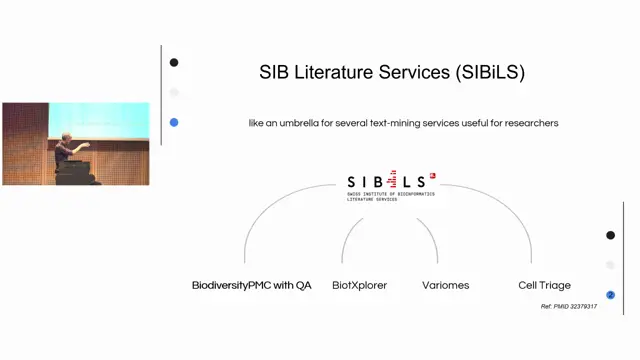
Literature triage to support Island Biodiversity Monitoring

Classifier-based literature triage matches human curators at a fraction of LLM cost and is worth investing in for recurring curation tasks.

Patrick Ruch
talk · 24 Sept · 15:02–⁠15:14 · FORUM

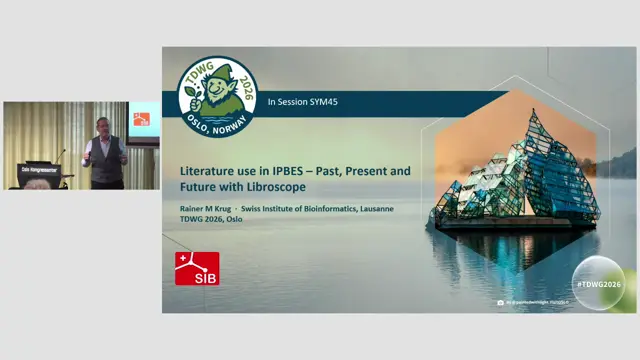
Literature usage in IPBES - Past, Present and Future with Libroscope

Open, scripted literature search via OpenAlex transformed IPBES practice, and the Libroscope could close remaining gaps by making paper contents and grey literature searchable.

Rainer M Krug
talk · 24 Sept · 15:14–⁠15:26 · FORUM

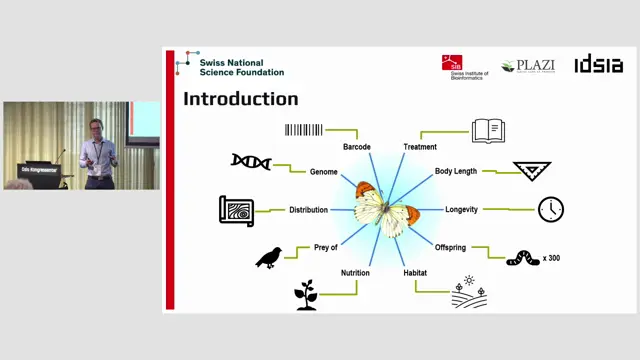
Species trait literature mining to support integrative biodiversity distribution modelling

Demonstrating research use cases like trait-informed distribution modelling is key to persuading funders to support literature mobilisation infrastructure.

Robert Waterhouse
talk · 24 Sept · 16:02–⁠16:14 · FORUM

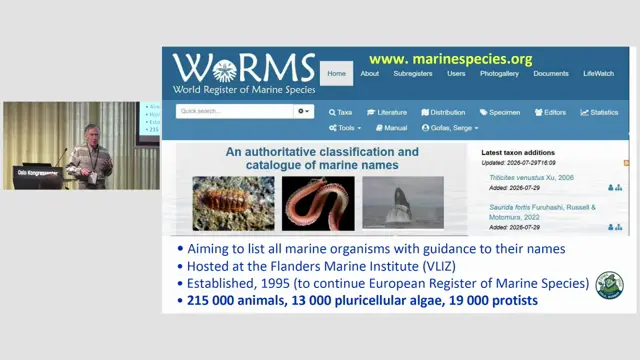
Mapping geographical distributions in the World Register of Marine Species

A country-aware, hierarchical marine geoscheme will let WoRMS and others record and query distributions consistently, pending a solution for defining spatial units in a TDWG standard.

Serge Gofas
talk · 24 Sept · 16:14–⁠16:26 · FORUM

Marine Regions as a backbone for the TDWG Marine GeoScheme

Marine Regions supplies the identifiers, boundaries and hierarchy that make a marine geoscheme maintainable.

Britt Lonneville
talk · 24 Sept · 16:26–⁠16:38 · FORUM

The new World Geographical Scheme for Recording (not only) Plant Distributions: process, progress and challenges

The terrestrial update is complete and the standard is nearly ready for public review, with packaging, naming and polygon hosting still to decide.

Francisco Pando
talk · 24 Sept · 16:38–⁠16:50 · FORUM

Digitising Plant and Fungal Collections at Royal Botanic Gardens, Kew: Applying International Standards to Support Data Sharing and Geospatial Analysis

WGSRPD enables cross-collection geospatial analysis at Kew, but historical, heterogeneous data leave half of records without fine-level assignment.

Udayangani Liu
talk · 24 Sept · 08:40–⁠08:55 · SAL A

Collaborative Development of an Institution-Wide Controlled Vocabulary

A shared vocabulary across a large museum depends as much on familiar tools, trusted forums and ongoing governance as on the terms themselves.

Caitlin Thorn
talk · 24 Sept · 08:55–⁠09:10 · SAL A

From Silos to Standards - Advancing Standardised Collection State Documentation for Institutional Continuity and Coordination

Standardising how collection state (readiness, risk, conditions) is recorded turns tacit curatorial knowledge into shared, comparable institutional memory.

Jacobus Christiaan Steenkamp
talk · 24 Sept · 09:10–⁠09:25 · SAL A

Bridging the Gap: Strategies for Integrating Person Identifiers into Collection Databases

Wikidata's community-built person data can be used to pre-structure candidate matches, but expert judgement and institutional priorities remain essential for identifying collectors.

Frederik Berger
talk · 24 Sept · 09:25–⁠09:40 · SAL A

Confronting legacy data for primary type specimens

Decades of database migrations left the second-largest insect collection's type catalogue unreliable, and only a full physical inventory is fixing it.

Cailin Meyer
talk · 24 Sept · 09:40–⁠09:55 · SAL A

From Legacy Database to Cloud: Challenges in Migrating Legacy Collection Data to a FAIR Collection Management System

A dedicated data manager who acts as liaison and uses iterative prototypes can make a small institute's move to a shared CMS workable despite fragmented legacy practices.

Marije Timmermans
talk · 24 Sept · 09:55–⁠10:10 · SAL A

A framework for aligning collections data with the global data ecosystem from data creation to extension in the Smithsonian National Museum of Natural History Department of Paleobiology

Making paleo collections work in the global data ecosystem needs an iterative, full life-cycle framework, not one-off digitisation.

Holly Little
discussion · 24 Sept · 10:10–⁠10:30 · SAL A

SYM29A panel discussion: working with collection managers, documentation and institutional strategy

Bridging cabinets and clouds depends on people: engaging collection managers, making data work visible, institutional strategy and durable documentation.

Caitlin Thorn, Jacobus Christiaan Steenkamp
talk · 24 Sept · 11:10–⁠11:25 · SAL A

Drawers in the dark harboring data that could spark - finding the sweet spot in collection digitization and mobilizing metadata from museum's collections

Plan digitisation for the easy 95%, capture a minimal dataset, and decide when good enough beats perfection.

Nora Lentge-Maaß
talk · 24 Sept · 11:25–⁠11:40 · SAL A

Accelerating specimen identification through Virtual Collections while promoting collaboration

Virtual reference collections with DOIs let experts identify and curate dispersed digital specimens remotely instead of shipping material or travelling.

Melanie de Leeuw
talk · 24 Sept · 11:40–⁠11:55 · SAL A

Managing high-volume specimen movements in the entomological collection of Naturalis with a new type of record

A 'lot' record linking taxa to storage units makes high-volume physical moves cheap to record and tells staff where each taxon is.

Myriam van Walsum
talk · 24 Sept · 11:55–⁠12:10 · SAL A

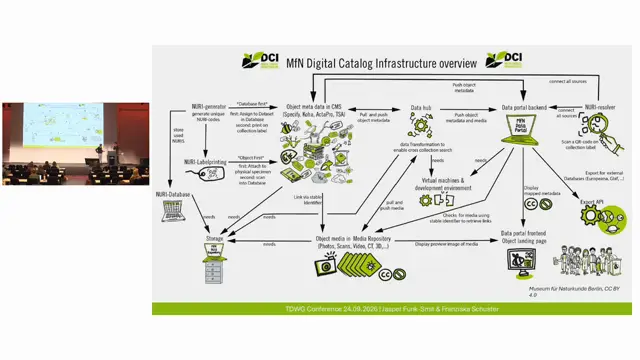
Everything is coded: How to prevent a game of telephone in a system full of interfaces

Shared understanding of what data means must be established at the start of a pipeline; standard formats alone won't stop meaning drifting between people.

Franziska Schuster, Jasper
discussion · 24 Sept · 12:10–⁠12:30 · SAL A

SYM29B panel discussion: publishing lot records and agile development

Lot-level records are worth publishing because they answer 'do you have this taxon?', but the definition of a lot differs between collections.

Caitlin Thorn, Myriam van Walsum
talk · 24 Sept · 14:06–⁠14:18 · SAL A

From Specimens to Networks: Darwin Core Data Packages in Practice

The Darwin Core conceptual model and Data Package give material entities a rich, relational context that flat Darwin Core Archives could not express.

John Wieczorek
talk · 24 Sept · 14:18–⁠14:30 · SAL A

Aligning An Evolving Global Data Model To Software With Global Ambitions: GBIF x TaxonWorks

TaxonWorks and DwC-DP have converged conceptually, but exchange between rich models will always be lossy, so mappings should be recorded explicitly.

Matthew Yoder
talk · 24 Sept · 14:30–⁠14:42 · SAL A

Material Samples and Occurrences in Darwin Core Data Packages: Practical Experiences from DINA

DINA's material-sample model maps well to DwC-DP, so DINA wants to publish without synthetic occurrences and needs community conventions for consumers to derive them.

Jonas Grieb
talk · 24 Sept · 14:42–⁠14:54 · SAL A

Sharing Extended Specimen Data from Symbiota Portals using Registered Extensions

Existing registered Darwin Core extensions met each of Symbiota's extended-specimen needs, so look for existing standards before inventing new ones.

Katie Pearson
talk · 24 Sept · 14:54–⁠15:02 · SAL A

Mapping the Relational Data Schema of the Diversity Workbench (DWB) to the Darwin Core Data Package Data Model to fit better to GBIF´s New Data Model

DwC-DP promises to carry the relational richness that previously pushed GFBio centres to ABCD, and a first DWB-to-DwC-DP prototype via the test IPT works.

Tanja Melanie Weibulat
talk · 24 Sept · 15:02–⁠15:10 · SAL A

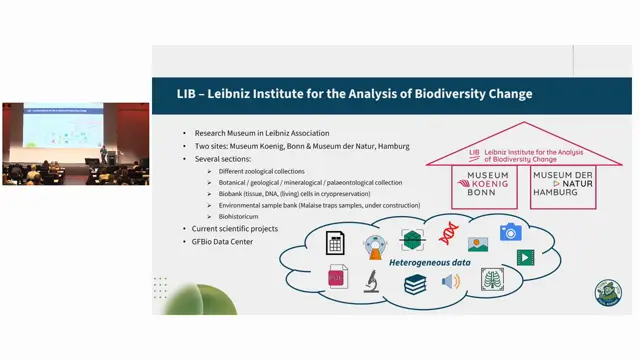
Diversity Workbench (DWB) as a Standards-Based Collection Management System for Heterogeneous Research Data and Biodiversity Data Mobilization

Diversity Workbench can hold very heterogeneous institutional data and publish it through standard pipelines, but its complexity pushes LIB to build web and API layers.

Birgit Rach
talk · 24 Sept · 15:10–⁠15:18 · SAL A

From Client to App: Extending Diversity Workbench with REST and graphical web interfaces

A concept-based REST API and search index let LIB build flexible web interfaces and ingest data on top of the complex Diversity Workbench database.

Björn Quast
talk · 24 Sept · 15:18–⁠15:30 · SAL A

The More Extended, The More Open: Semantic Integration of 3D Natural Heritage Data into Biodiversity CMS

Treating 3D specimen models as entry points in a knowledge graph that includes heritage context and digitisation paradata makes them reusable knowledge assets.

Yeeun Lee
talk · 24 Sept · 16:00–⁠16:12 · SAL A

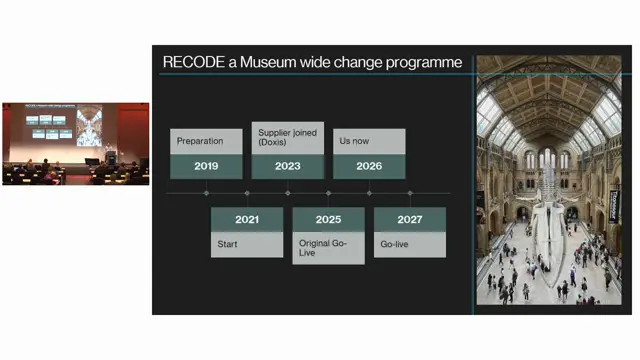
Old habits and new visions: Exploring the RECODE data model, future integration and data enhancement

Normalising decades of flat CMS data into relational entities and workflow-driven processes gives NHM a foundation for integrations and AI, but it needs institutional governance.

Steen Dupont
talk · 24 Sept · 16:12–⁠16:24 · SAL A

The Unruliness of Higher Geography: What is it doing for us?

Darwin Core needs more explicit, time-aware ways to share human and physical geography so data without coordinates can still be discovered and used.

Erica Krimmel
talk · 24 Sept · 16:24–⁠16:36 · SAL A

Mobilizing rich, interoperable, and secure fossil data from underserved collections using Symbiota

Targeted Symbiota enhancements around geological context, taxonomy and relationships make a low-barrier CMS viable for under-resourced fossil collections.

Erica Krimmel
discussion · 24 Sept · 16:36–⁠17:00 · SAL A

SYM42 discussion: DwC-DP profiles, deriving occurrences, ABCD's future and system boundaries

Richer relational models bring the community together but raise hard governance questions about profiles, occurrence derivation, system scope and link persistence.

James A. Macklin, Jonas Grieb
talk · 24 Sept · 08:35–⁠08:49 · SAL B

The BMD Cubing Engine: Harmonizing Biodiversity and Earth Observation Data

BMD's cubing engine turns a declarative YAML recipe into reproducible, provenance-documented data cubes that harmonise GBIF occurrences with climate and Earth observation data on one grid.

Mathias Dillen
talk · 24 Sept · 08:49–⁠09:03 · SAL B

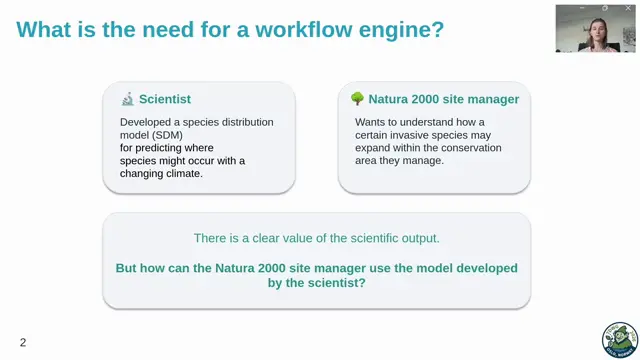
BMD workflow engine: FAIR workflows, RO-Crate and FAIR Signposting for a European biodiversity data space

Packaging containerised workflows and their runs as RO-Crates with FAIR Signposting lets non-technical users run models remotely and get machine-actionable, citable results.

Lena Perzlmaier
talk · 24 Sept · 09:03–⁠09:17 · SAL B

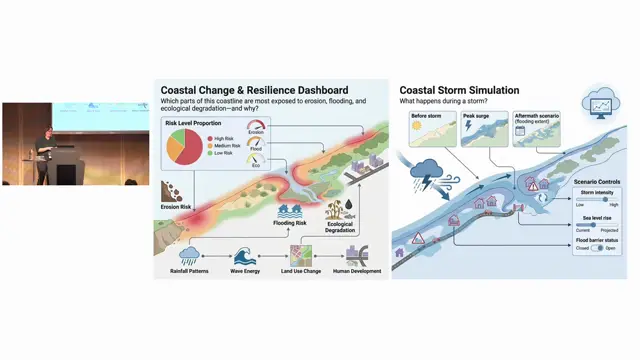
Beyond Data Integration: Ecological and Semantic Interoperability in Coastal Digital Twins

Coastal digital twins expose a long list of unresolved land-sea interoperability gaps, from vertical datums and shifting shorelines to missing cross-domain ontologies.

Laura Slaughter
talk · 24 Sept · 09:17–⁠09:31 · SAL B

From Buzzwords to Blueprints: What It Really Takes to Operationalise Biodiversity Digital Twins

Use buzzwords to get funded, then break them down into concrete blueprints: metadata, catalogues, governance and stewardship in the middle layer.

Sharif Islam
talk · 24 Sept · 09:31–⁠09:45 · SAL B

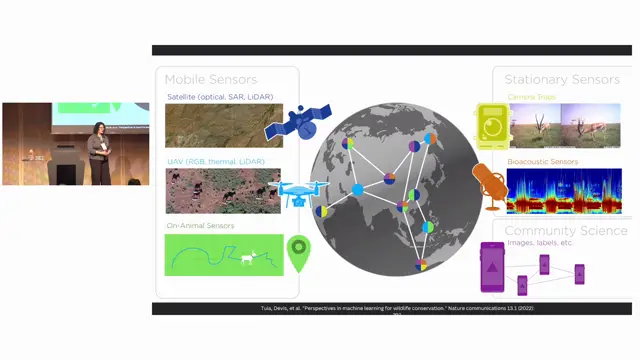
Digital Twins as System-Optimization Tools: Provisioning Edge and Cloud Infrastructure for Biodiversity Monitoring at Scale

Digital twins should close the sim-to-real loop for the sensor systems too, letting teams plan where and how to deploy multimodal monitoring before going into the field.

Tanya Berger-Wolf
talk · 24 Sept · 09:45–⁠09:59 · SAL B

How to operationalize large-scale aerial biodiversity monitoring?

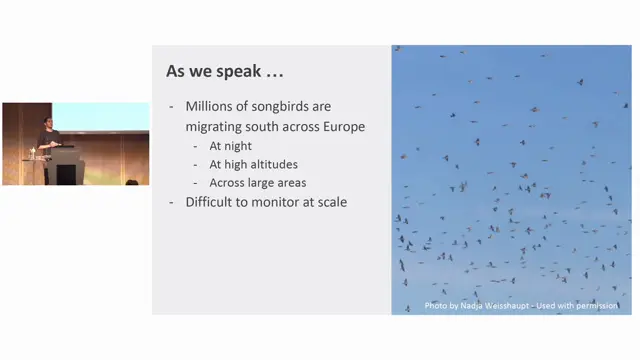
Existing weather radar networks already monitor bird migration continent-wide; with open standards and the Aloft archive, they could underpin a European migration-forecasting digital twin.

Peter Desmet
talk · 24 Sept · 09:59–⁠10:13 · SAL B

Operationalising biodiversity DT ecosystems through assessment-driven service mapping and reusable tools and workflow integration

A simple, purpose-first assessment that maps a team's needs and capabilities to an inventory of existing tools helps digital twin projects reuse rather than rebuild.

Syrine Ben Aziza
discussion · 24 Sept · 10:13–⁠10:30 · SAL B

Post-BioDT lessons and next-generation biodiversity digital twins

BioDT delivered pilots and, above all, mutual understanding between modellers and data people; the next generation must find real users and real conservation impact rather than chase the digital twin label.

Claus Weiland, Dimitri
talk · 24 Sept · 11:03–⁠11:15 · SAL B

Toward Quantitative AI-Readiness Metrics for Biodiversity Data Infrastructures

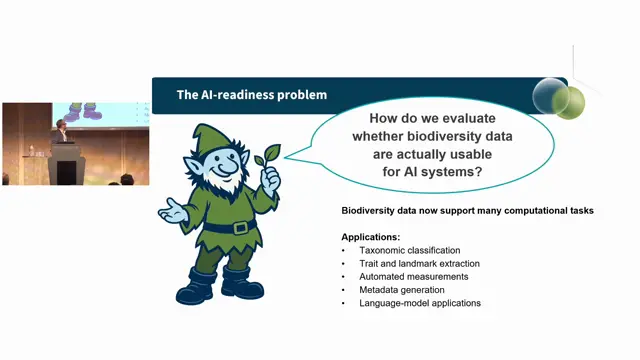
AI readiness should be a task-specific, measurable profile rather than a single score, and current biodiversity standards lack most of the terms needed to describe it.

Yasin Bakış
talk · 24 Sept · 11:15–⁠11:27 · SAL B

Traits Thesaurus: toward semantic harmonization of FAIR trait-based data on aquatic organisms

A community-validated SKOS thesaurus of aquatic trait terms and units can make open trait data genuinely interoperable across taxa.

Jessica Titocci
talk · 24 Sept · 11:27–⁠11:39 · SAL B

AI Ready Standards with Croissant for Type Specimens Catalog Datasets

Combining LLM extraction, Darwin Core and Croissant metadata offers a route from historical specimen catalogues to FAIR, ML-ready datasets.

Sefika Efeoglu
talk · 24 Sept · 11:39–⁠11:51 · SAL B

Unifying Biodiversity Images: Content-Based Identification with the ISCC standard (ISO 24138:2024)

ISCC gives images a content-derived, similarity-comparable identifier that anyone can recompute, addressing duplication, broken links and AI-generated fakes.

Wouter Addink
talk · 24 Sept · 11:51–⁠12:03 · SAL B

Provenance, Lineage, and Auditability in AI-Driven Biodiversity Image Workflows

Two persistent-identifier links per derived image, parent and batch, are enough to preserve auditable lineage and pipeline context for AI-processed biodiversity images, even outside the repository.

Xiaojun Wang
talk · 24 Sept · 12:03–⁠12:15 · SAL B

Robot-ready by construction: an ontology-driven, SHACL-validated submission pipeline for national ecological monitoring data

Driving both field data capture and RDF export from one semantically annotated specification makes monitoring data standards-compliant and machine-ready from the start.

Andrew Tokmakoff
talk · 24 Sept · 12:15–⁠12:27 · SAL B

Artificial Intelligence Amplifies Paleontology's Reproducibility Problem

AI can make uncertain paleontological data look clean and authoritative, so AI-ready data must also be verifiable back to evidence and interpretation.

Brooke Long-Fox
talk · 24 Sept · 14:00–⁠14:20 · SAL B

Not just another database: building the future of freshwater taxonomy with FADAtims

FADAtims turns the dormant FADA checklists into a living, expert-curated and interoperable freshwater taxonomic infrastructure, but its future depends on sustaining experts and systems.

Astrid Schmidt-Kloiber, Geraldine Mertens
talk · 24 Sept · 14:20–⁠14:35 · SAL B

Catalogue of Life and Freshwater species data

Catalogue of Life pledges to model and expose freshwater designations within a year, fed by FADAtims and WoRMS, finally allowing freshwater species and occurrences to be identified via GBIF.

Olaf Banki
talk · 24 Sept · 14:35–⁠14:50 · SAL B

A species-level taxonomic catalog of Neotropical freshwater insects: building a consensus reference for occurrence data integration and conservation planning

Without a reliable species-level checklist, Neotropical freshwater insect occurrences, distribution models and conservation arguments cannot be built.

Alejandra Correa-Bedoya
talk · 24 Sept · 14:50–⁠15:05 · SAL B

Biodiversity data at your fingertips: open-access freshwater biodiversity information systems for South Africa and Africa

Co-designed, open and interoperable freshwater information systems like FBIS turn fragmented records into decision-ready information, and multi-tenancy helps keep them sustainable.

Helen Dallas
talk · 24 Sept · 15:05–⁠15:20 · SAL B

The FIPbio data portal: towards an integrated freshwater biodiversity data ecosystem

FIPbio aims to make freshwater data publishing and analysis easier by combining FADA taxonomy, GBIF occurrences, site context, abiotic and remote-sensing data, and automated catchment annotation.

Vanessa Bremerich
discussion · 24 Sept · 15:20–⁠15:30 · SAL B

Freshwater data platforms: acronym soup, abundance, classifications and data quality

The freshwater community prefers connected, specialised platforms feeding GBIF over one system, but must address abundance data, classification consistency and trust in data from diverse providers.

Koen Martens, Anne Lyche Solheim
talk · 24 Sept · 16:00–⁠16:15 · SAL B

A collaborative perspective on a globally standardised river basin name database

Freshwater biodiversity data need a global, multilingual, collaboratively maintained river basin naming system, and TDWG, Wikidata and OpenStreetMap could build it together.

Daniel Mietchen
talk · 24 Sept · 16:15–⁠16:30 · SAL B

From 'Lost in Translation' to Fit-for-Purpose Data: Why Ecologists and Conservation Practice Still Need Groupings and Uncertainties

Biodiversity data systems must be able to record identification uncertainty and taxonomic groupings, or ecologists face a choice between false certainty and lost ecological information.

Bernhard Kløw Askedalen, Natalie
talk · 24 Sept · 16:30–⁠16:45 · SAL B

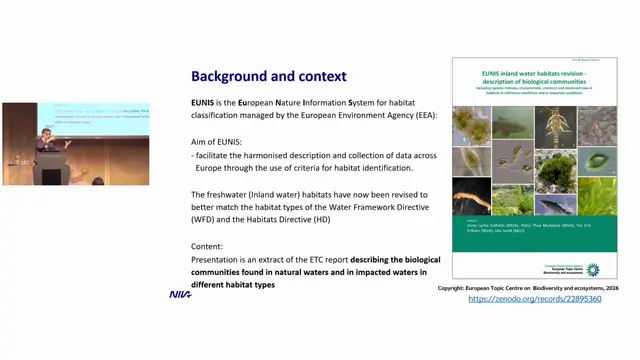
How does human impact change species diversity and composition in 50 types of inland water habitats?

Human pressures erase the natural distinctness of freshwater habitat types, making their biological communities converge on degraded states with fewer characteristic species.

Anne Lyche Solheim
talk · 24 Sept · 08:33–⁠08:46 · SAL C

SpecifyaaS: Managing Ephemeral Repositories in Collections-Based Research

Giving researchers their own lightweight Specify instances early in the research process standardises data from the start and eases later exchange with the institutional collection.

Kevin Holston
talk · 24 Sept · 08:46–⁠08:59 · SAL C

Applying Data Standards at the Royal Botanic Garden Edinburgh

Identifiers are how RBGE is standardising legacy herbarium data and reconnecting items spread across four separate collection management systems.

Robyn Drinkwater
talk · 24 Sept · 08:59–⁠09:12 · SAL C

From Legacy Data to FAIR Workflows: Standardising Biodiversity Collections Using Specify

Standardised workflows, not just a new database, turned 11 differently managed collections into GBIF-ready data.

Siyabonga Zamisa
talk · 24 Sept · 09:12–⁠09:25 · SAL C

Digitize, Standardize, Mobilize: Wildlife Biodiversity Biobanking with Specify

Specify's hierarchical trees and attachments turned a fragmented wildlife biobank into a traceable extended-specimen data system.

Kim Labuschagne
talk · 24 Sept · 09:25–⁠09:38 · SAL C

Integrating Specify in broader Science infrastructure

Specify works best at RBG Victoria as one component of a wider hub-based science infrastructure, with custom tools filling its gaps.

Niels Klazenga
talk · 24 Sept · 09:38–⁠09:51 · SAL C

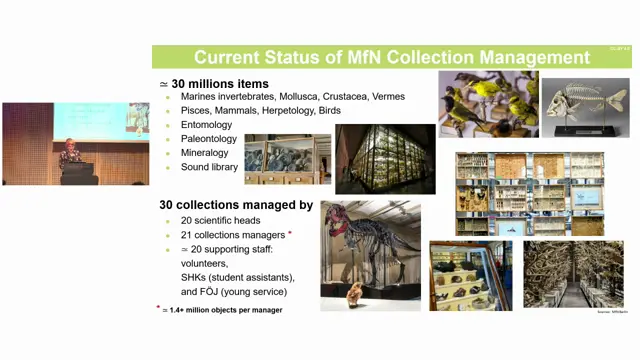
The Good, the Bad, and the Standardised: A Specify Journey Through 200 Years of the MfN Berlin's Biological Collections

Specify's flexibility lets MfN consolidate 30 historically complex collections into one database while starting to reconstruct colonial and wartime history, but geography and historical events remain unsolved.
Marion Depraetere
talk · 24 Sept · 09:51–⁠10:04 · SAL C

Meeting Biodiversity Standards with Specify 7

Specify's new built-in Darwin Core mapping tool aims to make publishing from highly customised databases straightforward without giving up local flexibility.

Grant Fitzsimmons
talk · 24 Sept · 10:04–⁠10:17 · SAL C

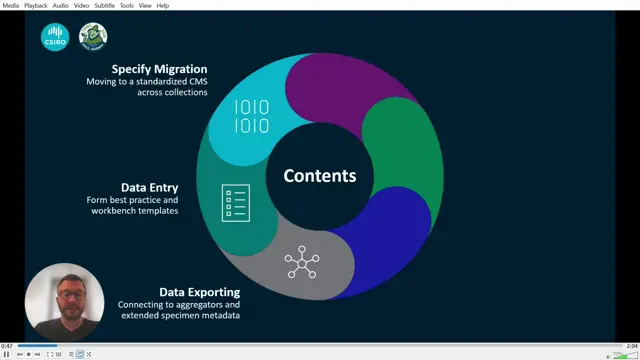
From Data Entry to Distribution: Streamlining Biodiversity Workflows with Specify at CSIRO

Layered standards in templates, roles and training let CSIRO keep five Specify instances consistent while each collection keeps its own outputs.

Dan Baker
talk · 24 Sept · 10:17–⁠10:30 · SAL C

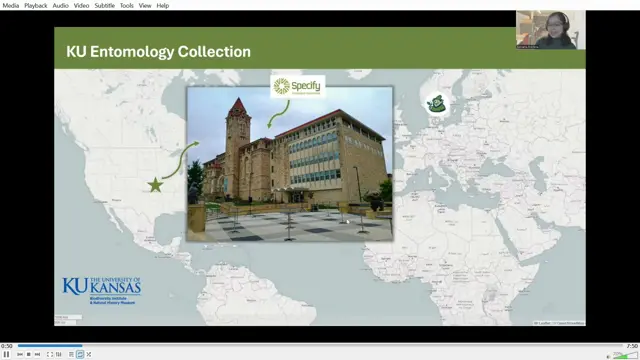
Updates on Data Mobilization in the KU Entomology Collection

Moving to Specify 7 with a nightly Darwin Core archive feed made KU Entomology's data and images continuously available to GBIF, Symbiota portals and students.

Samanta Orellana
talk · 24 Sept · 11:05–⁠11:20 · SAL C

A metadata-first FAIR4AI checklist and automated evaluation agent for biodiversity datasets

FAIR4AI is mainly a metadata gap, and a community checklist plus an automated agent can measure and help close it while tracking provenance and governance back to data sources.

Tanya Berger-Wolf
talk · 24 Sept · 11:20–⁠11:35 · SAL C

Phenobase: a harmonized, AI-ready knowledge base of global plant phenology

Combining ontologies with machine learning lets Phenobase close global phenology data gaps, but making the result AI-ready requires per-record model provenance, quality and citation.

Robert Guralnick
talk · 24 Sept · 11:35–⁠11:50 · SAL C

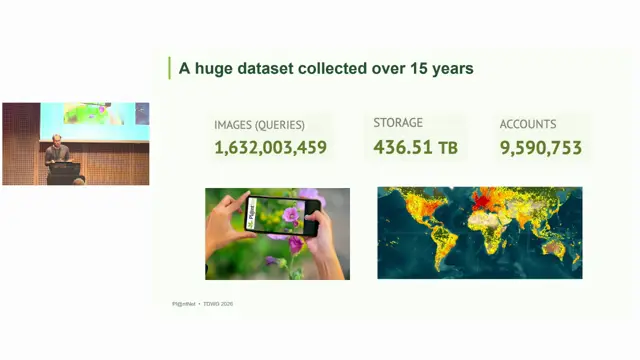
From 1.5 Billion Raw Queries to AI-Ready Biodiversity Data: Human-AI Collaborative Curation Pipelines in Pl@ntNet

Pl@ntNet's human–AI pipeline filters a vast, noisy stream into two GBIF datasets and training data, with separate branches for opted-in human-validated and automatic occurrence-only data.

Alexis Joly
talk · 24 Sept · 11:50–⁠12:05 · SAL C

From Sensor to Species: AI-Assisted Segmentation, Deep Learning Workflows, and Persistent Biodiversity Records from Earth Observation Systems

Persistent organism identifiers for remotely sensed individual trees could turn repeat Earth-observation imagery into longitudinal biodiversity records, but only if uncertainty and model provenance travel with every record.

Kit Lewers
talk · 24 Sept · 12:05–⁠12:20 · SAL C

On-Device AI for Data Cleaning, Standardisation, and Exploration in Collections Management

Local LLM hardware can clean and enrich millions of legacy collection records at predictable cost, but validation of the outputs is the unsolved problem.

Jack Hollister, Unidentified co-presenter
talk · 24 Sept · 12:20–⁠12:30 · SAL C

FAIR, CLEAR, and Causal: A semantic framework for ecological knowledge synthesis

Semantic Units can turn ecological causal claims into addressable, versioned graph objects to which evidence and failures can be pinned, helping ecology accumulate rather than merely accrue causal knowledge.

Lars Vogt
talk · 24 Sept · 14:00–⁠14:15 · SAL C

Mobilising and integrating extracted information from the literature into a biodiversity data ecosystem - the BIOfid approach

BIOfid mobilises Central European biodiversity literature with NLP, ontologies and standards, because raw LLM extraction still hallucinates identifiers and needs verification.

Gerwin Kasperek
talk · 24 Sept · 14:15–⁠14:30 · SAL C

Camtrap DP: extending data standard designed for camera trapping research to support AI workflows and new data sources

Camtrap DP fits data from any stationary sensor, and converging community feedback shows how to extend it for AI provenance and multimodal monitoring.

Karolina Kuczkowska
talk · 24 Sept · 14:30–⁠14:45 · SAL C

FAIR² Drones: An AI-Ready Standard for Cross-Domain Wildlife Drone Dataset

A shared dataset card that captures ecological, robotic and computer vision metadata makes costly drone datasets reusable across disciplines.

Jenna Kline
talk · 24 Sept · 14:45–⁠15:00 · SAL C

Causal Mosaic Schema: Encoding Causal Claims in Ecological Literature as Machine-Actionable Knowledge Graphs

Encoding how and how strongly the literature claims causation, not just what causes what, can link siloed ecological knowledge into decision-support tools for practitioners.

Tim Alamenciak
talk · 24 Sept · 15:00–⁠15:15 · SAL C

LifeGate: Extending a Global Visual PhyloMap into a Structured Biodiversity Knowledge System

LifeGate's visual map of all described species will become an open, connected knowledge system with trait-based faceted search built from AI-assisted literature extraction.
Martin Freiberg, Birgitta König-Ries
discussion · 24 Sept · 15:15–⁠15:30 · SAL C

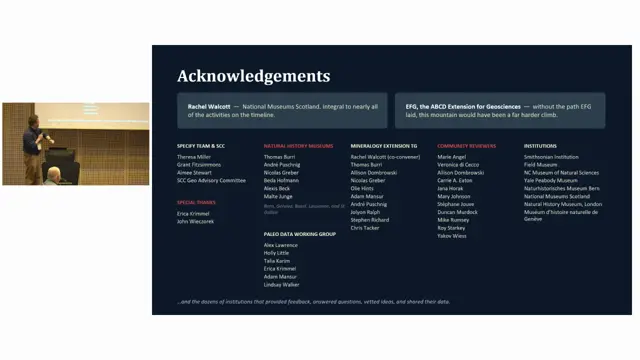
Panel discussion: From Mobilizing Data to AI-Ready Knowledge

AI-readiness is purpose-dependent, and the hardest remaining problems are social: trust, attribution, governance and data sovereignty, where ontologies and knowledge graphs offer some control and explainability.
Hilmar Lapp, Robert Guralnick
talk · 24 Sept · 16:00–⁠16:15 · SAL C

How Literature Services can Support & Benefit from Biodiversity Publication and Data Standards?
Standards-based concept annotation of biodiversity literature enables focused, evidence-grounded question answering that is more precise than general chatbots.

Patrick Ruch
talk · 24 Sept · 16:15–⁠16:30 · SAL C

From NetCDF to Web Maps: Building an Open-Source Web GIS for Biodiversity Data Cubes

A simple open-source stack of NetCDF, THREDDS/ncWMS and vanilla JavaScript makes multidimensional biodiversity data cubes browsable and analysable in the browser.

Christian Langer
talk · 24 Sept · 16:45–⁠17:00 · SAL C

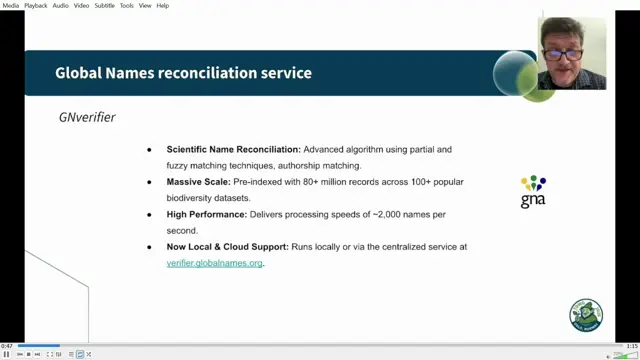
Local scientific name resolution using custom data sources

GNverifier can now be run locally over any custom or private name datasets, using the standardised SFGA format and GNdb, with the same API as the central service.

Dmitry Mozzherin
talk · 25 Sept · 08:30–⁠08:45 · FORUM

Standardizing Multimodal Insect Monitoring Data for AI-Ready Pipelines: Lessons from an InsectAI Community Datathon

Camtrap DP can largely accommodate automated insect monitoring data today, but the community needs agreed guidance and a few targeted extensions (track IDs, parent media and crop offsets, target taxonomic scope, identification provenance) to handle insect-specific challenges.

Jamie Alison
talk · 25 Sept · 08:45–⁠09:00 · FORUM

From Standardized Field Methods to AI-Ready Knowledge: The LEPMON Project with the LAUP Infrastructure Stack for Automated Moth Monitoring

LEPMON's LAUP portal shows an end-to-end infrastructure for camera-based moth monitoring that builds Camtrap DP into routine data management, making millions of observations downloadable and analysable.

Peter Grobe
talk · 25 Sept · 09:15–⁠09:30 · FORUM

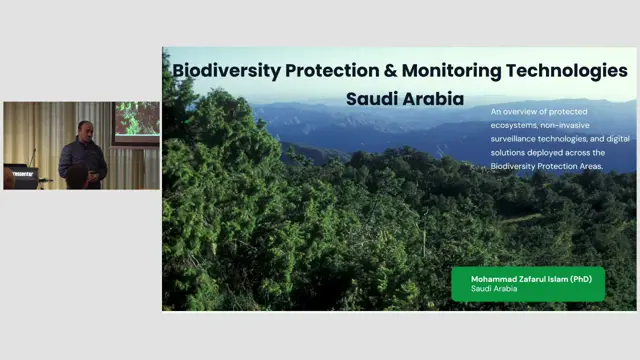
Integrating advanced monitoring technologies for spatially explicit, ecosystem-based biodiversity conservation across diverse habitats in Saudi Arabia

Saudi Arabia's network of 35 Biodiversity Protection Areas combines reintroductions, spatial risk mapping and satellite, camera-trap and drone monitoring to conserve species across very diverse ecosystems.

Mohammad Zafarul Islam
talk · 25 Sept · 09:30–⁠09:45 · FORUM

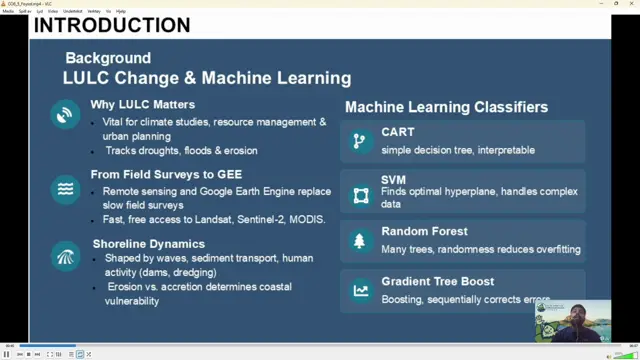
Evaluating Four Machine Learning Using Google Earth Engine for Analyzing LULC Dynamics of Sandwip Island, Bangladesh

Random Forest in Google Earth Engine gave the most accurate land cover classification of the highly dynamic Sandwip Island, revealing large increases in built-up area and mangroves alongside strong shoreline erosion and accretion.

Md Abrar Al Foysol
talk · 25 Sept · 08:36–⁠08:48 · SAL A

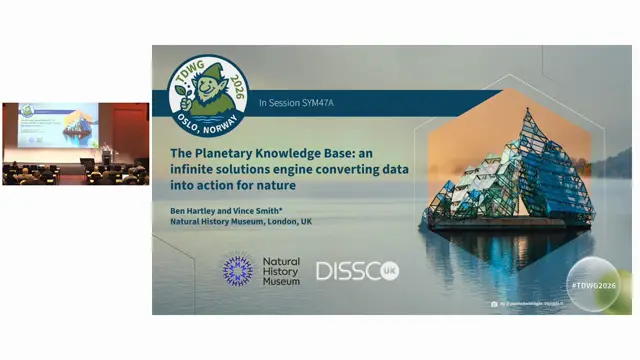
The Planetary Knowledge Base: an infinite solutions engine converting data into action for nature

The NHM is building the Planetary Knowledge Base in phases, with provenance, attribution and benefit-sharing designed in, to move biodiversity data to evidence to action at scale.

Vincent Smith
talk · 25 Sept · 08:48–⁠09:00 · SAL A

SCRIBE: Structured Collection Record Interpretation and Bio-entity Extraction

SCRIBE aims to replace many collection-specific extraction workflows with one LLM and computer-vision platform that turns any uploaded record images into structured data.

Arianna Salili-James
talk · 25 Sept · 09:00–⁠09:12 · SAL A

From Historical Oology Cards to Structured Biodiversity Data: Multimodal LLM Transcription, Uncertainty Metrics, and Human Review

Token-level hesitation from log-probabilities does not tell you which transcriptions are wrong, but it reliably predicts where human review effort will go.

Grete Pasch
talk · 25 Sept · 09:12–⁠09:24 · SAL A

Using Large Language Models to enhance biodiversity knowledge extraction: From taxonomic treatments to graph-based knowledge systems

Taxonomic treatments hold underused habitat knowledge that LLMs and a provenance-preserving knowledge graph can structure and link to ecoregions, helping map data-poor species.

Ian Ondo
talk · 25 Sept · 09:24–⁠09:36 · SAL A

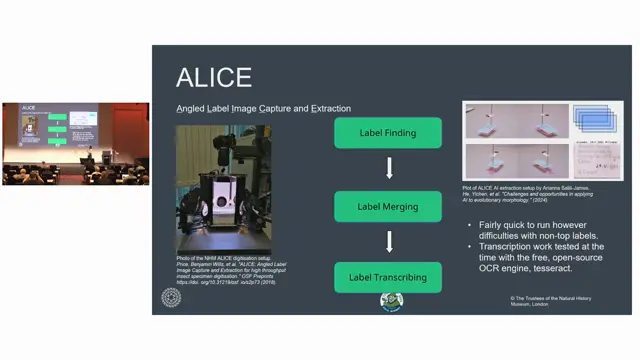
Automated data transcription and Darwin Core field itemization from insect specimen labels using machine learning

Labellum goes beyond label OCR to itemise insect-label text into Darwin Core fields, with high accuracy for most fields but problems with catalogue numbers.

Torsten Dikow
talk · 25 Sept · 09:36–⁠09:48 · SAL A

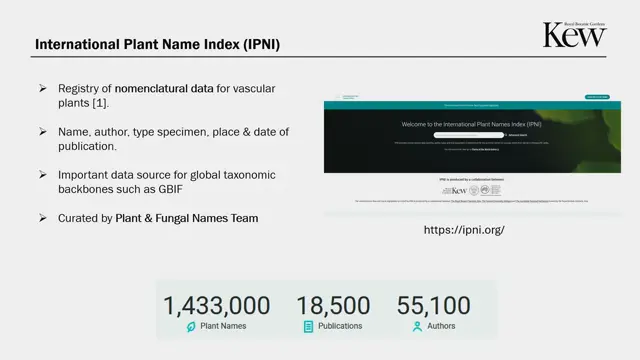
LLM-Based Pipeline for Extracting Nomenclatural Acts from Taxonomic Literature

A grounded, schema-constrained two-pass LLM pipeline extracts IPNI-ready nomenclatural data well once treatments are found; finding treatment boundaries is the bottleneck.

Ishaipiriyan Karunakularatnam
talk · 25 Sept · 09:48–⁠10:00 · SAL A

Extracting Structured Biodiversity Knowledge from Literature with AI-Assisted Workflows

A hybrid text-layer/OCR tool can free tables from grey-literature PDFs into CSV with about 83% precision, but it misses a third of tables, especially narrow ones.

Yağmur Güleç
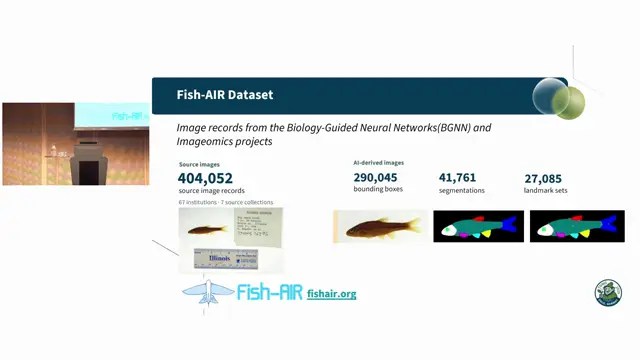
talk · 25 Sept · 10:30–⁠10:42 · SAL A

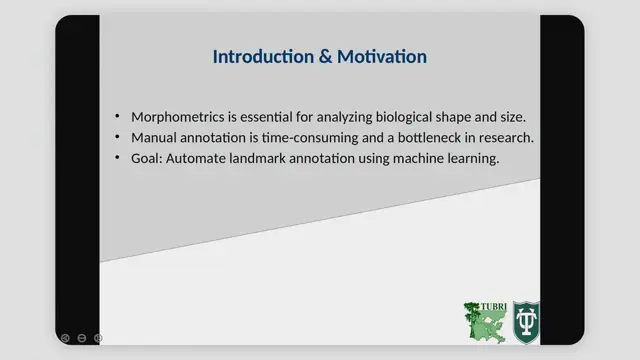
Automated Landmark Detection for Scalable Morphometric Data Extraction from Digitized Fish Collections

A lightweight dlib shape-regression model can automate most fish landmarking from museum images, but inner landmarks and variable specimen poses remain hard.

Bahadir Altintas
talk · 25 Sept · 10:42–⁠10:54 · SAL A

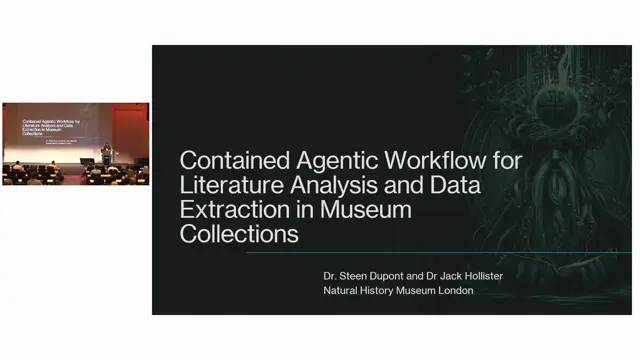
Contained Agentic Workflow for Literature Analysis and Data Extraction in Museum Collections

Contained, local agentic RAG over a literature corpus is feasible on a laptop or shared edge machine, avoiding the security worries of cloud agents in museums.

Steen Dupont
talk · 25 Sept · 10:54–⁠11:06 · SAL A

Curation through citation: using AI and a knowledge graph to curate DNA barcodes

Linking barcodes, specimens and literature in a knowledge graph could fix many BOLD records, if we can reliably extract the connecting codes from papers.

Roderic Page
talk · 25 Sept · 11:06–⁠11:18 · SAL A

Integrating Many Data Sources in iChatBio Enables Emergent Scientific Use Cases

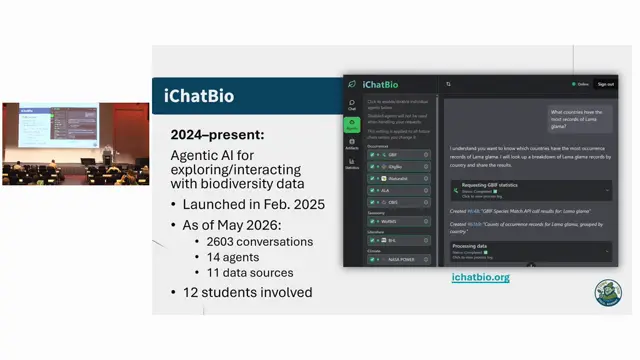
iChatBio's specialised agents let a conversational interface combine many biodiversity data sources, with traceable, non-hallucinated data artefacts.

Michael Elliott
talk · 25 Sept · 11:18–⁠11:30 · SAL A

Reliable LLM-assisted curation of ecological survey data: a deployed agent bridging field collection and data curation

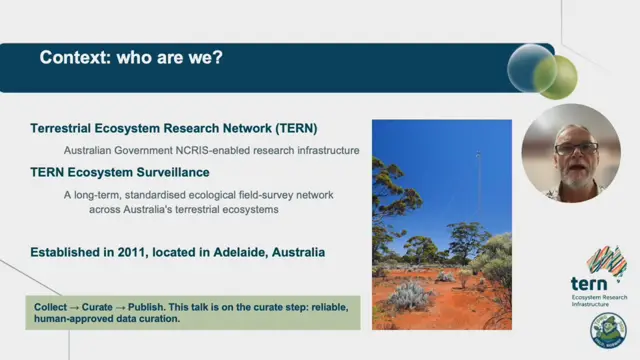
An LLM agent that proposes findings for curator approval, with confirmed patterns turned into deterministic rules, catches plausibility errors that schema validation misses.

Andrew Tokmakoff
talk · 25 Sept · 11:30–⁠11:42 · SAL A

Enhancing Biodiversity Georeferencing Using Large Language Models and Knowledge Graphs

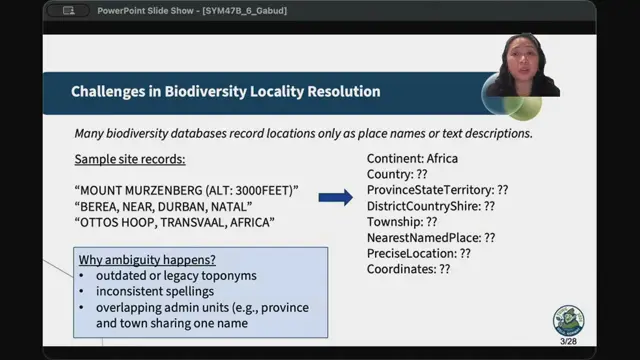
LLM preprocessing plus knowledge-base matching fills in locality hierarchies and proposes coordinates, with a review tool to keep humans in control.

Roselyn Gabud
talk · 25 Sept · 11:42–⁠11:54 · SAL A

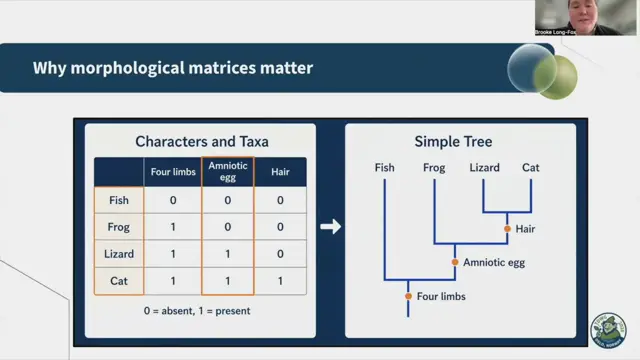
Validating LLM-Extracted Biodiversity Data to Preserve Scientific Meaning

LLM extraction speeds up morphological matrix curation enormously, but errors, including fabrications, appear in almost every output, so expert validation is essential.

Brooke Long-Fox
discussion · 25 Sept · 13:00–⁠15:00 · SAL A

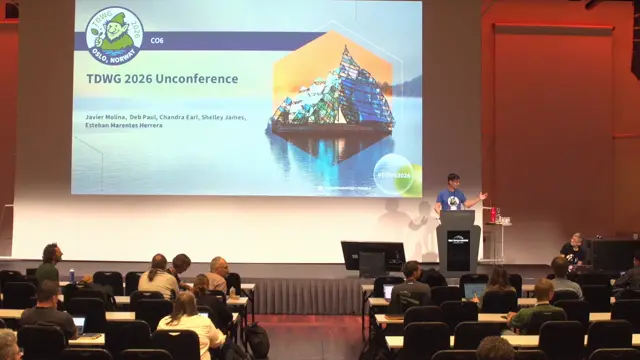
TDWG 2026 Unconference: pitches, topic voting and breakout report-backs

The Unconference showed the community's priorities (controlled vocabularies, AI readiness, project sustainability, Wikidata, Darwin Core data packages) and started several follow-up groups.

Javier Molina, Nicky Nicolson
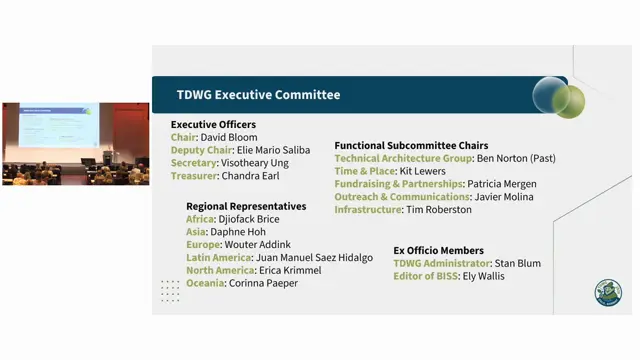
talk · 25 Sept · SAL A

TDWG Business Meeting: elections, subcommittee and working group reports, and TDWG 2027 announcement

TDWG is recruiting for key elected roles and subcommittees while reporting a busy standards year and announcing a large joint 2027 meeting in Montreal.

David Bloom, Ben Norton
talk · 25 Sept · SAL A

TDWG Treasurer's Report: financial policies and investment proposals

TDWG is financially stable but not growing its membership; the treasurer proposes codified policies, an endowment and investments to fund outreach and sustainability.

Chandra Earl
talk · 25 Sept · 08:30–⁠08:50 · SAL B

Ctrl+Alt+SDD: A Historical Review Toward a Standard Reboot

SDD is well-documented but dormant and imperfectly interoperable, and the Xper4 rebuild is an opportunity to reopen and modernise it together with the community.

Elie Saliba, Adeline Kerner
talk · 25 Sept · 08:50–⁠09:04 · SAL B

Structured identification keys complementing AI: closing the corpus bottleneck with AI-assisted digitisation

AI and identification keys are complementary, and LLM-assisted digitisation of printed literature now makes it feasible to build structured keys at scale for expert review.

Wouter Koch
talk · 25 Sept · 09:04–⁠09:18 · SAL B

Beyond traditional identification keys: hybrid deep learning and Xper3 keys for insect identification

Deep-learning pre-filtering of an interactive key keeps the key's explainability while greatly shortening identification paths.

Agathe Puissant
talk · 25 Sept · 09:18–⁠09:32 · SAL B

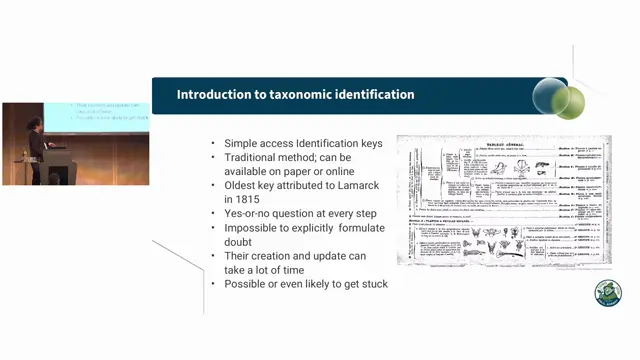
Needs for data standards about sharing and analyzing identification tools usage

SDD should be extended so identification sessions (context, uncertain responses, backtracking and AI outputs) become open, shareable data, not just the keys.

Régine Vignes Lebbe
talk · 25 Sept · 09:32–⁠09:46 · SAL B

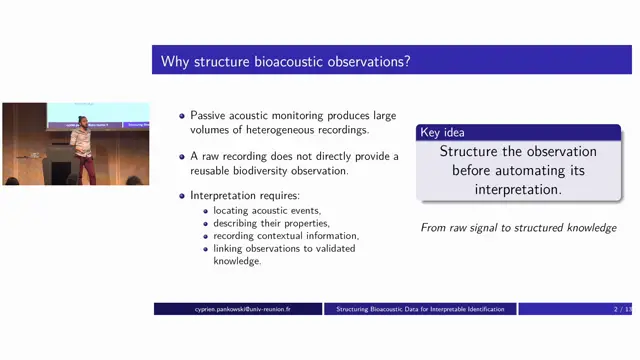
The Iterative Signal-Based System (ISBS): Structuring Bioacoustic Data for Interpretable Identification

Describing cetacean vocalisations with explicit descriptors and symbolic classification gives interpretable, taxonomy-like structure to bioacoustic data before large-scale AI.

Cyprien Pankowski
talk · 25 Sept · 10:30–⁠10:45 · SAL B

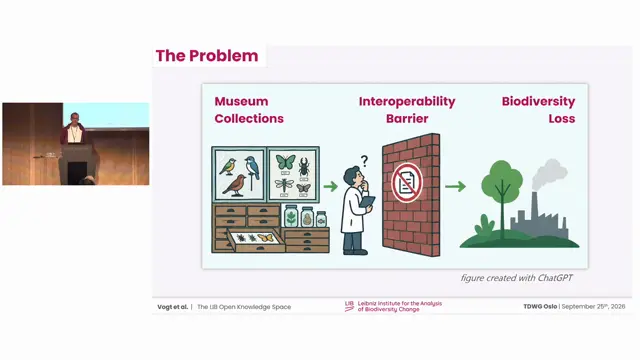
The LIB Open Knowledge Space: A semantic architecture for FAIR, CLEAR, and AI-ready biodiversity knowledge

Knowledge can enter the LIB Open Knowledge Space as natural language immediately and be formalised step by step, so content becomes FAIR, CLEAR and AI-ready incrementally.

Lars Vogt
talk · 25 Sept · 10:45–⁠11:00 · SAL B

Strengthening Taxonomic capacity and Biodiversity Information in Education

Taxonomy and biodiversity informatics need to be visible, modern parts of curricula, and TDWG should revive its curriculum interest group to secure training and knowledge transfer.

Patricia Mergen
talk · 25 Sept · 11:00–⁠11:15 · SAL B

Enabling machine-readable access to biodiversity data through federated semantic querying

Distribute the data, not the infrastructure: cloud Parquet plus OBDA query rewriting gives a virtual Darwin Core knowledge graph without duplicating data into RDF.

El-Amine Mimouni
talk · 25 Sept · 11:15–⁠11:30 · SAL B

Prototype: The Semantic Units Framework and Rosetta Statements for Knowledge Graph Construction Workflows

Rosetta-statement templates compiled into RML and SHACL make semantic-unit knowledge graphs much easier to author, at the cost of larger graphs.

Tarek Al Mustafa
talk · 25 Sept · 11:30–⁠11:45 · SAL B

What is the Role of "AI" in the Centers for Biodiversity Informatics of the Future?

Biodiversity informatics centres are about people. AI raises the importance of standards, storage, openness and distributed risk, and centres should fuel researchers' curiosity rather than be driven by the technology.

Matthew Yoder
discussion · 25 Sept · 11:45–⁠12:00 · SAL B

Discussion: designing institutional biodiversity knowledge and data science centres

Interoperable institutional knowledge spaces depend less on technology than on people, shared storage and semantics, incentives and governance.

Unidentified session chair, Lars Vogt
talk · 25 Sept · 08:30–⁠08:45 · SAL C

Approaches to the Automated Tracking of Taxonomic Research Activities

TETTRIX aims to build a machine-run, regularly updated picture of who is doing taxonomy on what and where, and is asking the community which sources it is missing.

David Fichtmueller
talk · 25 Sept · 08:45–⁠09:00 · SAL C

Empowering and Expanding Communities from Knowledge to Best Practices in Data Mobilization: The TaiBIF Collaborator Training System

A tiered, role-based certification pathway linked to paid assignments lets a small GBIF node multiply its support capacity.

Melissa Chin-Yi Lu
talk · 25 Sept · 09:00–⁠09:15 · SAL C

Bionomia, Scholia, Wikidata and Zenodo: broadcasting biodiversity data contributions

Linking people, specimens, publications, datasets and collections through Wikidata and associated tools (Bionomia, Scholia, Expeditia, Zenodo) makes biodiversity contributions findable and creditable.

Siobhan Leachman
talk · 25 Sept · 09:15–⁠09:30 · SAL C

Handling evidence: a cross-disciplinary perspective

Biodiversity standards should stop treating what was recorded and what was concluded as the same kind of fact, borrowing evidence-handling practice from forensics, archaeology and medicine.

Dmitry Schigel
talk · 25 Sept · 09:30–⁠09:45 · SAL C

A Network That Is Social: A Community-Based Model and Plan for Sustaining MorphoSource, a Scholarly 3D Data Repository

MorphoSource will sustain open access to 3D data by charging museums, journals, societies and depositors, never downloaders, as NSF funding ends.

Julie Winchester
talk · 25 Sept · 09:45–⁠10:00 · SAL C

Hit or miss? Creative promotion of biodiversity data and standards for success and recognition

The community should broaden what it counts and publishes as outputs, and deliberately reach new audiences with creative, citable formats.

Shelley James, Deborah Paul
talk · 25 Sept · 10:40–⁠10:55 · SAL C

Building a Living Publication Workflow for Long-Term Social-Ecological Monitoring Data: The Taiwan LTSER Experience

Embedding Darwin Core alignment as automated checkpoints in a repository-based pipeline keeps continuously updated monitoring data flowing to GBIF.

Jhu-Jyun Jhang
talk · 25 Sept · 10:55–⁠11:10 · SAL C

Snapshot Japan: A Community-Driven Network for Large-Scale Wildlife Biodiversity Monitoring Using Camera Traps

Community support plus a simple standard protocol and Camtrap DP publishing let Snapshot Japan scale camera-trap monitoring from 9 to 65 sites in three years.

Kumiko Totsu
talk · 25 Sept · 11:10–⁠11:25 · SAL C

Reporting structure and sampling-bias correction in citizen-science bird data across Asian cities

Abundant citizen-science records do not guarantee inference support; reporting structure can distort richness hotspots and urban-biodiversity relationships unless it is diagnosed and controlled.

Yeshan Qiu
talk · 25 Sept · 11:25–⁠11:40 · SAL C

From sampling-event datasets to the Humboldt Extension: a TaiBIF assessment and pilots for long-term monitoring in Taiwan

Giving monitoring-data providers immediate site-level trend feedback, based on a minimal set of Humboldt terms, can motivate adoption better than asking for the full extension.

Jerome Chie-Jen Ko
talk · 25 Sept · 11:40–⁠11:55 · SAL C

ASEAN Biodiversity Dashboard as a data sharing platform to monitor biodiversity trends and species occurrences in the ASEAN Region

Interoperable, GBIF-hosted regional infrastructure lets ACB turn occurrence data into indicators and dashboards for ASEAN policy reporting.

Christian Elloran