
X-raying wild plant seeds: preparing images for future AI-driven global biodiversity research
Robert Turner · Digitizing Collections & Legacy Data
Summaries and key moments are machine-produced. Check the recording for the speaker’s exact words.
The short versionAdding scale and linking legacy seed X-rays to collection records turns an inaccessible archive into AI-ready research data.
What this was about
Robert Turner explained how Kew is migrating 21 years of Millennium Seed Bank seed X-ray images (used for non-destructive seed quality testing: healthy, empty or infested seeds) from a network drive into its digital asset management system and linking them to collections data. As part of Kew's 2021-2026 digitisation programme and new Integrated Collections Management System (Earthscape, occurrence-centred with links to WCVP/POWO and Index Fungorum), Python tools add a resolution-based grid and scale bar to each image, validated against physical seed measurements. Images go into the Digifolia DAMS, are exposed via S3/CloudFront URLs linked in Earthscape, and will reach users through the Kew data portal and the future Seed Pod portal, subject to checking material and data agreements.
Why it matters. Seed X-rays could support AI research on identification, viability and damage across the world's largest ex situ seed collection.
In the room
- X-raying is non-destructive, rapid and suitable for small seeds, unlike destructive cut tests.
- The Millennium Seed Bank holds about 105,000 seed collections of 40,000 species from 191 countries.
- 21 years of X-ray images were stored on a network drive inaccessible to most staff and external scientists.
- Potential AI uses include taxonomic identification, morphology, germination/viability and infestation/damage detection.
- Python tools read DPI from image metadata or DICOM files to compute grid spacing and add scale labels.
- Earthscape separates collection objects from occurrences so herbarium, seed and living collections from one event share an occurrence.
- Data sharing is constrained by material agreements with countries whose alignment with data agreements must be checked.
Notable moments
Transcript
Automatically generated captions can contain mistakes, especially in names and technical terms. Times are relative to the room recording.
Read the transcript ↓
Related talks.
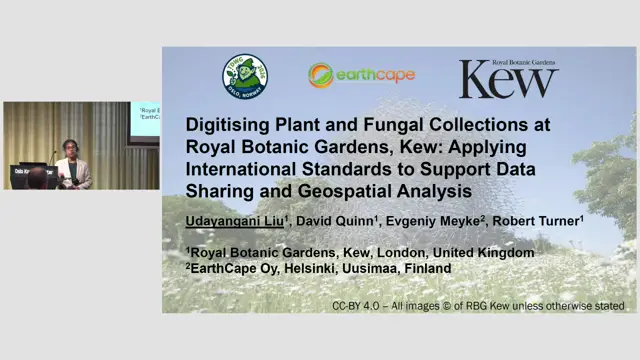
Digitising Plant and Fungal Collections at Royal Botanic Gardens, Kew: Applying International Standards to Support Data Sharing and Geospatial Analysis
WGSRPD enables cross-collection geospatial analysis at Kew, but historical, heterogeneous data leave half of records without fine-level assignment.
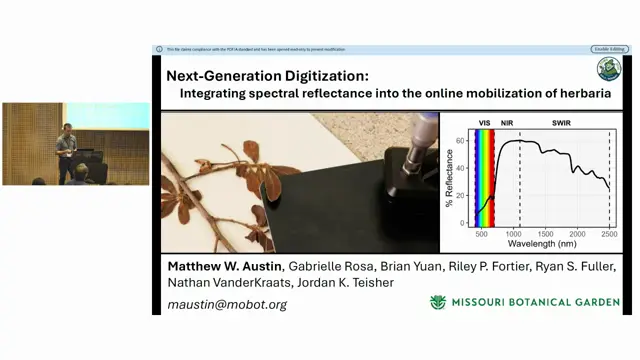
Next-generation digitization: integrating spectral reflectance into the online mobilization of herbaria
Spectral reflectance can be captured at scale during herbarium digitisation and supports accurate species identification from leaves alone.
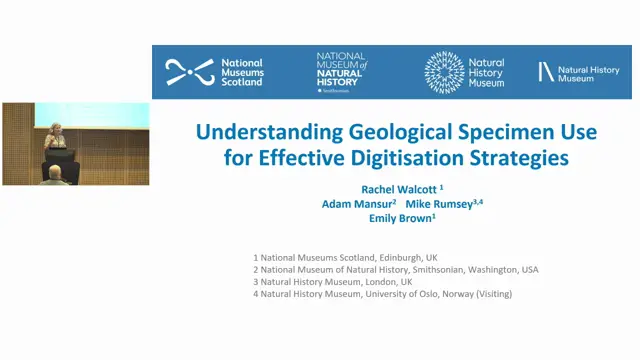
Understanding geological specimen use for effective digitisation strategies
Evidence from inquiries, loans and publications shows geological specimens have diverse, sometimes unexpected uses, which should shape which data are digitised first.