
Literature usage in IPBES - Past, Present and Future with Libroscope
Rainer M Krug · Planning the Libroscope: creating research ready biodiversity from scientific publications
Summaries and key moments are machine-produced. Check the recording for the speaker’s exact words.
The short versionOpen, scripted literature search via OpenAlex transformed IPBES practice, and the Libroscope could close remaining gaps by making paper contents and grey literature searchable.
What this was about
Rainer Krug, an ecologist and data user involved in IPBES, described how IPBES literature searching moved from tedious, non-reproducible Web of Science and Scopus web-interface searches to scripted, transparent OpenAlex API searches after IPBES adopted a data management policy in 2020. OpenAlex is open, free and downloadable, handles millions of works on a desktop and supports snowball citation searches, whereas a Web of Science licence for one assessment would have cost over a million. Remaining gaps are content inside papers, languages, shrinking abstract availability and grey literature, which the Libroscope could address through semantic extraction and ingestion on demand.
Why it matters. Transparency of evidence is essential for intergovernmental assessments approved by governments, and this shows how open infrastructure and content extraction serve that need.
In the room
- IPBES assessments synthesise existing knowledge, so literature is central and must be fully transparent to governments.
- Earlier web-interface searches in Web of Science and Scopus were tedious, error-prone and not reproducible.
- The 2020 IPBES data management policy requires data management reports documenting source data, processing and code.
- OpenAlex is open by design, free at typical use, offers API and Parquet snapshots; 4.5 million works handled on a desktop.
- Web of Science licensing for the transformative change assessment would have cost more than a million.
- Gaps: data inside papers, keyword searches limited by language, reduced abstract availability, and grey literature.
- Proposed: search by content and facts, snowball searches over knowledge graphs, and ingestion on demand from OpenAlex into Biodiversity PMC.
Notable moments
Transcript
Automatically generated captions can contain mistakes, especially in names and technical terms. Times are relative to the room recording.
Read the transcript ↓
Related talks.
The future is the future - thought about access to data in publications
Liberating data from literature works, but the future lies in use-case-driven, digital-first publishing that also targets the undescribed majority of species.
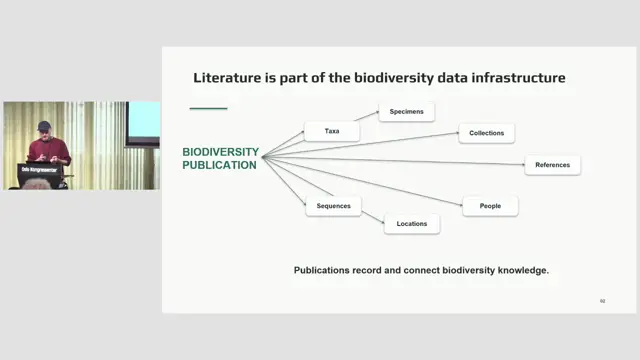
Biodiversity literature as FAIR and AI-ready data by design (and how to get there)
Don't just liberate biodiversity literature, publish it liberated.
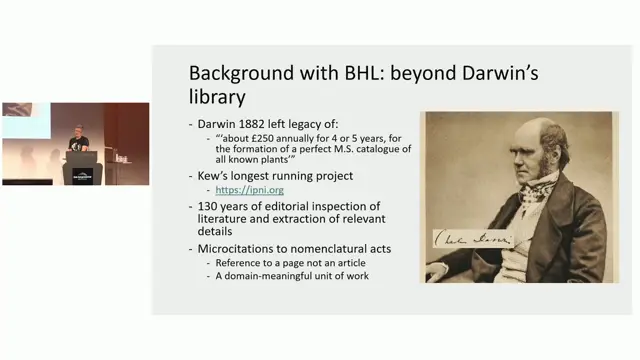
Possibilities to enhance the semantic navigation of BHL: further developing the 'unit of work'
Letting user communities carve BHL into branded, pre-filtered 'hosted portals' could serve diverse needs, satisfy funders and drive innovation.