
Traits Thesaurus: toward semantic harmonization of FAIR trait-based data on aquatic organisms
Jessica Titocci · AI-Readiness Metrics and Metadata for Biodiversity Data
Summaries and key moments are machine-produced. Check the recording for the speaker’s exact words.
The short versionA community-validated SKOS thesaurus of aquatic trait terms and units can make open trait data genuinely interoperable across taxa.
What this was about
Jessica Titocci presented the Trait Thesaurus, a SKOS thesaurus developed with LifeWatch Italy to harmonise functional trait terminology for aquatic organisms. She described the heterogeneity of trait data (sources, aggregation levels, repositories, structures) and especially semantic heterogeneity, such as 'body size' meaning prosome length for copepods. Four separate domain thesauri (fish, macroalgae, phytoplankton, zooplankton) were merged by manual and automated ontology alignment into a unified resource of over 1,500 concepts (now five schemes including macrobenthos) published on EcoPortal, with URIs, synonyms, definitions, units and SKOS mappings to existing resources. It is used for semantic annotation in LifeWatch Italy's portal and in projects like PoMP.
Why it matters. Open trait data are not automatically reusable; shared definitions are needed for cross-taxa synthesis and for AI/NLP applications on trait data.
In the room
- Trait data come from literature, collections, in situ monitoring and remote sensing, at individual, species or community level, quantitative or qualitative, in varied repositories and structures.
- Semantic heterogeneity is the hardest problem: different terms for the same thing and the same term with different meanings (e.g. body size vs prosome length in copepods).
- Development steps: scoping, term gathering, formalisation (SKOS data model, VocBench editor), then editing and community validation before publication.
- Four independent domain thesauri (fish, macroalgae, phytoplankton, zooplankton) were aligned manually and automatically into one Trait Thesaurus of more than 1,500 concepts.
- Now five schemes (including macrobenthos); each term has a preferred label, URI, synonyms, definition, scheme membership, units and SKOS closeMatch/exactMatch mappings.
- Published on EcoPortal; used for semantic annotation of datasets, metadata and attributes in the LifeWatch Italy data portal and metadata catalogue.
- Applied to harmonise plankton datasets in the Polar Ocean Mitigation Potential (PoMP) project and in progress for a coral reef benthic database.
Notable moments
Transcript
Automatically generated captions can contain mistakes, especially in names and technical terms. Times are relative to the room recording.
Read the transcript ↓
Related talks.
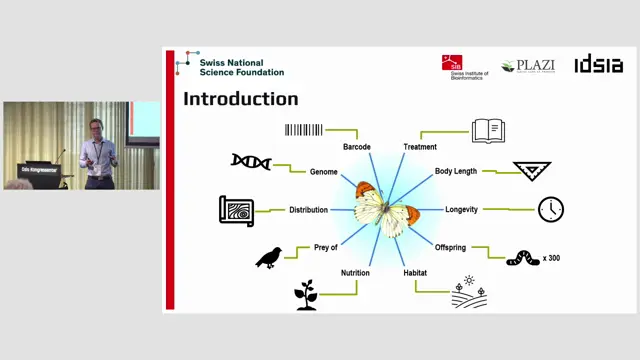
Species trait literature mining to support integrative biodiversity distribution modelling
Demonstrating research use cases like trait-informed distribution modelling is key to persuading funders to support literature mobilisation infrastructure.
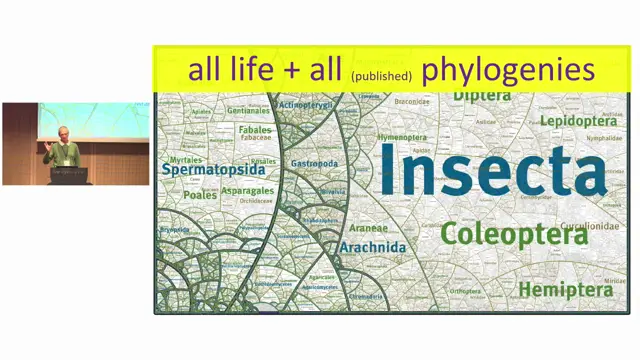
LifeGate: Extending a Global Visual PhyloMap into a Structured Biodiversity Knowledge System
LifeGate's visual map of all described species will become an open, connected knowledge system with trait-based faceted search built from AI-assisted literature extraction.
BHL and the Planetary Knowledge Base: Structuring Biodiversity Literature for the Next Generation
NHM is re-OCRing all of BHL with modern models and extracting entities into a knowledge graph, with confidence gating to protect BHL data quality.